Ohio State’s #1!

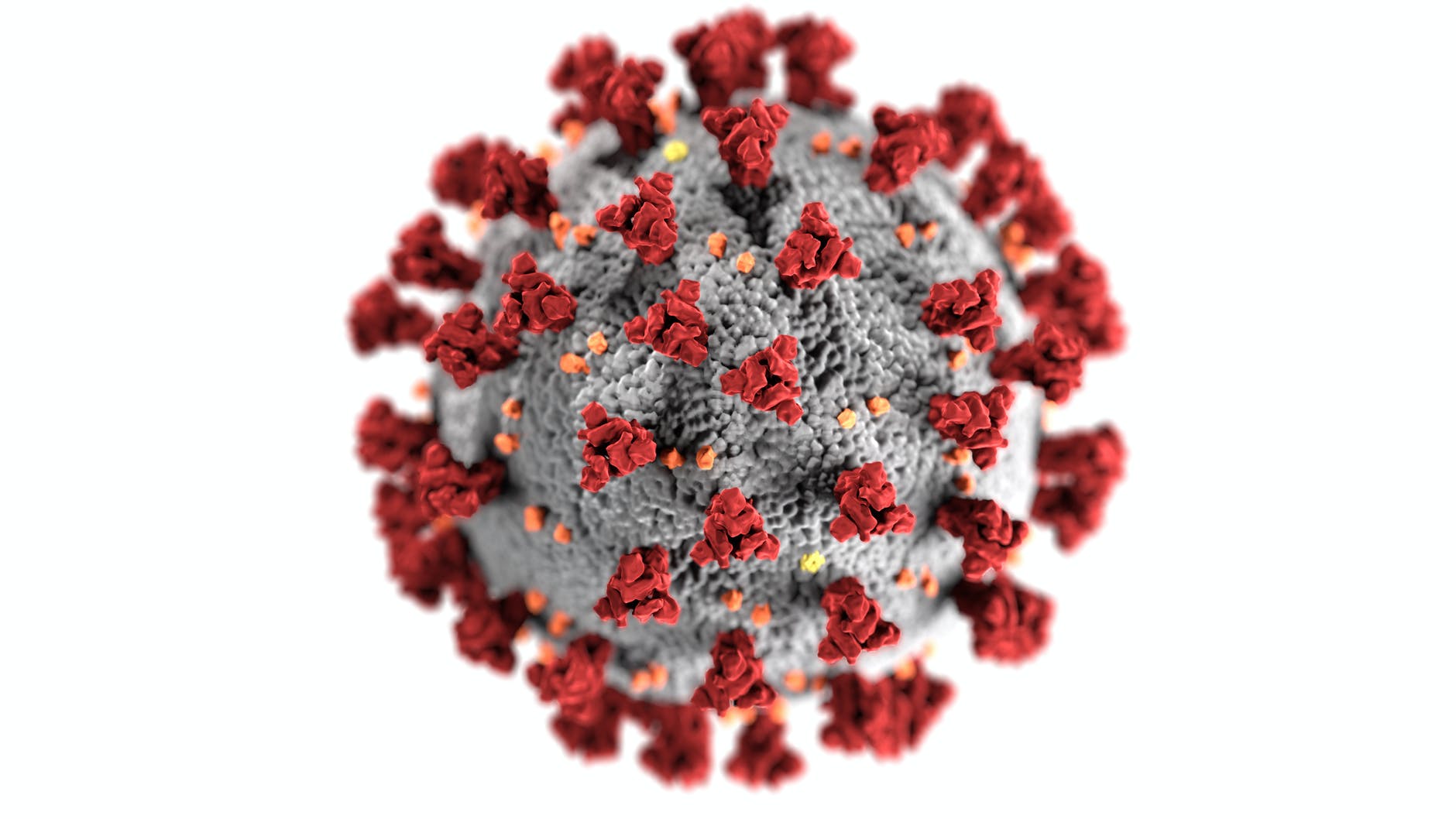
Photo by CDC on Pexels.com

Ohio State University is outpacing many states in testing its both on-campus and off-campus students. The school has tested 200,000 students since it started processing tests on campus on October, 2020.

The Columbus Dispatch‘s Sheridan Hendrix wrote that “COVID-19 tests became mandatory for students living in dorms. Testing later increased to include students living off-campus and frontline employees.”

Simone Jasper in the Miami Herald reported that the plunge in Covid cases nationwide could be attributed in part to the fact that “the seven-day average of new tests was trending downward in recent days.” Jasper wrote:

With the focus shifting to the COVID-19 vaccination effort, Eleanor Murray, a Boston University School of Public Health expert, pointed out some cases may simply be going unnoticed. Murray said she worried it could be getting more difficult to be tested as focus shifts to vaccination efforts.

The Nashville Tennessean‘s Brett Kelman described how the partying which had occurred all during the pandemic throughout the South culminated in T-Town:

On Jan. 11, as many southern states were grappling with the most infections they’d ever seen, the Alabama Crimson Tide crushed the Ohio State Buckeyes in the last game of a bizarre and incomplete season of college football.

When final whistle blew, thousands of Alabama college students took to the streets of Tuscaloosa to celebrate amid the deadliest year of their lives. The crowd, mostly unmasked, packed shoulder-to-shoulder on a quarter-mile street called The Strip. The spread of the virus was far smaller than the Mardi Gras carnival that kicked off coronavirus 11 months prior, but parallels in behavior were obvious. 

They chugged beers. They chanted cheers. They spread joy. And the second year of coronavirus in the American South began the same as the first – with a party.

Although Alabama‘s Crimson Tide beat the Ohio State Buckeyes in the football championship game, it appears that Ohio State University is winning in terms of testing on campus. At the University of Alabama the testing of off-campus students, which comprise seventy-five percent of its student body, is voluntary. The school has attempted to increase its sentinel testing (random sampling of asymptomatic individuals), as Kelly Hutchinson in the campus newspaper The Crimson White reported, by “offering incentives like gift cards and BamaCash” to off-campus students who are not required to be tested.

UAB epidemiologist Dr. Suzanne Judd, as reported by Donna Thornton, has said that “herd immunity” might explain the recently decreasing numbers in Covid cases in Alabama. She speculated that more people were infected early in the pandemic than have tested positive. She said that studies indicate that more people have antibodies for COVID-19 than those who tested positive for the virus. She said that, combined with vaccinations, those earlier infections might promote a “herd immunity.” Judd‘s idea about herd immunity may differ from other experts in the field.

Christelle Ilboudo, MD, infectious disease expert at MU Health Care, doubts that infection will provide long-term protection from the virus. She and other epidemiologists think that “herd immunity” will not be achieved until 80-90% of the population have COVID-19 immunity. “We have not achieved any herd immunity through a natural disease process to most major infectious diseases that affect the population to this scale. All of the major infections I know of have required vaccination.”

Newspaper headlines about declining cases may result in people exercising less caution when in public. 

An article in the Tuscaloosa News by Becky Hopf about a proposed Tuscaloosa Half Marathon for March reported that runners would be maskless. She wrote:

Since 2019, FRESHJUNKIE Racing has administered the races, and, in the time of COVID, race director Jonathan Dziuba assures the event will execute safety precautions.

The main points of the plan that concern runners is the assigned wave start times based on the runners’ anticipated finish time, the requirement to wear a mask at all times when not actually running [emphasis mine] on the race course and the lack of a big post-race party atmosphere this year. The focus is on the run and giving people an opportunity to compete in one.

Wearing a mask while running is required in any safe event. In the New York Times, Gretchen Reynolds has written about Covid issues and running. “If you pass other runners, try to swing at least 6 feet wide, and preferably 15 feet or more, because respiratory particles are unlikely to float that far, he said. And avoid drafting behind other racers; their expired air congregates in the shoulder-wide slipstream behind them.” 

She wrote that gaiters were often used and that runners must wear them “or another facial covering at the start and whenever they pass other runners en route.” Bert Blocken, a professor of civil engineering at Eindhoven University of Technology in the Netherlands and KU Leuven in Belgium (who studies airflow, including during cycling and running events), said that runners should “carry a handkerchief and keep their mucus and spittle contained,”  In such races, said. He added that “it is well known that saliva and snot flies around.”

Reynolds explained, “Since those fluids could contain viral particles if the racer releasing them is infected, runners should not spit or blow their noses into the air, he said, and steer clear of any racers who do not comply.”

A Runner’s World article by Jordan Smith gave guidelines for runners. Heather Milton, M.S., exercise physiologist supervisor at NYU Langone Health’s Sports Performance Center, was reported as having said “even when you’re wearing a mask, it’s important to also keep a big distance between yourself and others—both factors are important when it comes to prevention of infection. Wearing a mask is not a substitute for social distancing.” She warned that “universal masking would help prevent the spread of the virus, but that is likely not realistic that all runners will adhere to that during the length of a race.”


The perception that might be created by this marathon that things are getting back to normal in T-Town, by holding a race in March where runners wear no masks, may have the same effect as the optimistic newspaper pandemic headlines. In a town where there was a notorious celebration on The Strip, that would be the last thing that the doctor would order.


Standard

Crowds & Covid in the Street

Photo by Marcin Dampc on Pexels.com

A color run provides a good illustration of people being in a crowd during a pandemic. Just envisage the paint as viral droplets.

But people participating in a color run are usually moving. It’s a race. The crowd that gathered on The Strip to celebrate the University of Alabama football team’s national championship on January 11th, 2021, was largely stationary. After all people were packed together like sardines. They were, of course, eventually able to move out of the way of the squad cars that dispersed them.

There have been newspaper reports that the event on The Strip, which largely involved four or five thousand students who poured out of bars and came from nearby student housing, did not lead to a significant spike in Covid-19 cases. That’s remarkable. Events throughout the nation that have involved far fewer people, such as people going to church, wedding receptions, White House events and parties, have been super-spreaders.

A Facebook page post, which might well have been tongue and cheek, explained the lack of contagion among students. It said that students had developed a “herd immunity.” “Between their parties and bars and surging numbers from earlier in the pandemic they’ve all had it already.” Of course, if that unlikely scenario were actually the case, they could never ever see their parents, grandparents and outside friends, etc. without potentially exposing them.

NOLA.com‘s Emily Woodruff‘s article about how New Orleans in 2020 became an early coronavirus hotspot quoted Jeremy Kamil, a professor of microbiology and immunology:

“If college students are crowding on Bourbon Street, a lot of those people won’t get seriously ill,” said Kamil. “But if they go home and visit grandma, or if they spread it to someone else who spreads it to someone else who works in a nursing home or is a prison employee, then all of a sudden you’re indirectly involved in a chain of events where now you, in some way, have participated in the death of 90 people.”

New Orleans, in preparation for the 2021 Mardi Gras took measures, such as shutting bars citywide and putting up street barriers. Jeff Adelson reported for NOLA.com that bars that flouted coronavirus rules were being shuttered in early February.

Another national football championship brought people into the streets. On January 7, 2021, in Tampa Bay and other cities Super Bowl celebrants duplicated what occurred on The Strip. USAToday‘s Josh Peter wrote:

Thousands of people took to the roads and the streets across this city Sunday night after the Tampa Bay Buccaneers beat the Kansas City Chiefs 31-9 in Super Bowl 55. What many didn’t bring to the impromptu celebration was masks.

The festivities turned especially raucous outside the Tampa Convention Center downtown, where college-aged revelers cheered, guzzled alcohol and sometimes surrounded cars that were blaring music. 

There was little sign of masks.

“It’s been a long year with COVID,’’ said Kyle Bradshaw, 25, wearing a Tom Brady jersey. “People are ready to party.’’

According to AL.com‘s John Sharp there was a lot of apprehension in Mobile, Alabama over Mardi Gras activities. He wrote:

Mobile’s police chief said Monday he remains concerned about the “safety of our men and women” on Mardi Gras Day when the city moves forward with closing its downtown streets – allowing for potential crowds and with the potential of eight separate block parties occurring during the day.

Chief Lawrence Battiste said that “less than 25%” of his department is vaccinated from COVID-19, as most law enforcements have opted not to receive a shot since they had first offered them last month. That means most of the police patrolling the streets during Mardi Gras will be “exposed to the virus.”

As far as vaccinations were concerned a report by USAFacts indicated that younger people were far less likely to be vaccinated:

53% of adults “definitely” plan to get vaccinated or have already received full vaccination. Forty-five percent either said they were less than absolute that they would get vaccinated (responding “probably,” “probably not,” or definitely will not”) or reported that they’d already had their first shot and don’t plan to receive a second.

There are demographic differences between people seeking vaccinations and those who aren’t. Fifty-one percent of adults under 25 said they were uncertain or won’t get fully vaccinated, compared with 27% of the 65 and older population who said the same.

Mandatory testing for the Covid-19 virus was only required at the University of Alabama for on-campus students returning after its break. Any vaccination requirements may likewise be limited to students who live on-campus. And CNBC.com‘s Abigail Johnson Hess wrote that it would be difficult to keep unvaccinated students off-campus.

At the University of Massachusetts, as reported in Forbes by Michael T Nietzel, because of an increase in Covid-19 cases, the university’s campus risk level was placed at “High Risk” with a number of “significant new restrictions on classes and other campus activities for a two week period.” Neitzel wrote:

University of Massachusetts Chancellor Kumble Subbaswamy acknowledged that the steps “may seem like drastic measures.” But, he continued, “faced with the surge in cases we are experiencing in our campus community, we have no choice but to take these steps. By acting aggressively now, we are confident we can contain this surge and more quickly return to normal operations, including a resumption of in-person classes and organized student activities. Our extensive planning process anticipated the possibility of this occurrence, and we are prepared to take swift and decisive action to protect our community. Be assured that in all we do, the health and well-being of our students, faculty and staff are of paramount concern.” 

Perhaps T-Town and the University of Alabama will continue to beat the odds and the large numbers of students who have not observed Covid-19 safety precautions when they are off-campus will not precipitate the kind of spike in cases that occurred in Massachusetts. In any event, people who are in the college age range will not likely require hospitalization. Many are asymptomatic and might not even be aware that they have been infected since there is no mandatory testing for students. However they can certainly spread the virus in the community.

Standard