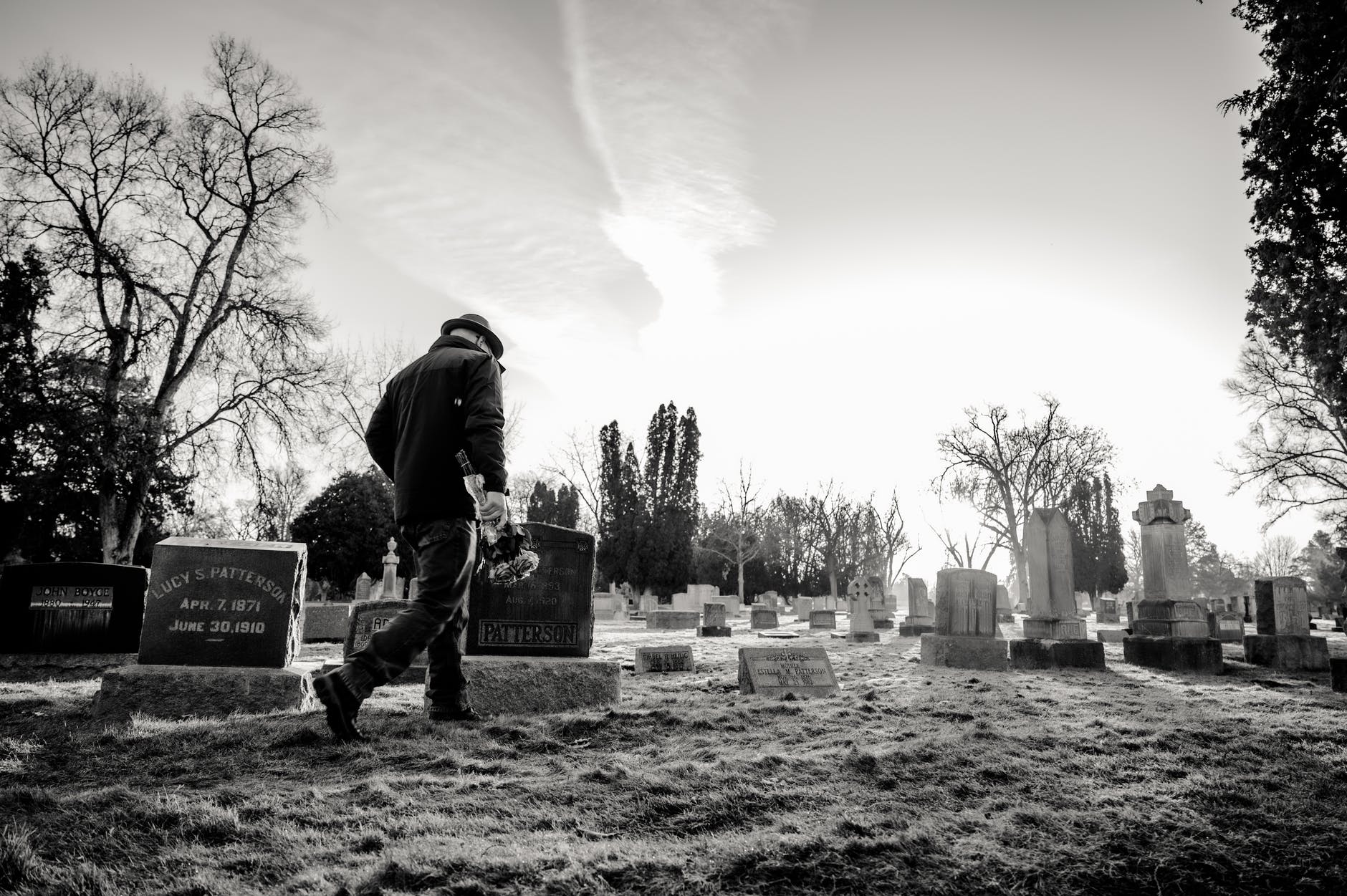
Covid Memorial Day 2021

Photo by Brett Sayles on Pexels.com

In February, 2021 the death toll from Covid-19 of over 500,000 in the United States was compared to all of the Americans killed in World War II, Korea and Vietnam combined. An Associated Press (AP) article said, “The U.S. recorded an estimated 405,000 deaths in World War II, 58,000 in the Vietnam War and 36,000 in the Korean War.” When this FSB post was written on Memorial Day 2021, 594,000 lives in the United States had been lost to Covid-19.

USAToday‘s Steven Vargas and Elinor Aspegren reported that for the holiday that “restrictions have been lifted at the nation’s cemeteries dedicated to veterans for vaccinated individuals.”

But many concerns about the impact of Covid-19 on the 2021 Memorial Day holiday had been expressed.

An USAToday article by Elinor Aspegren and Ryan W. Miller included this warning.

With coronavirus cases dropping and 50% of American adults fully vaccinated, Memorial Day weekend figures to be a test of whether the U.S. can avoid the spikes in infections and hospitalizations that occurred amid, and after, the winter holidays before vaccines were widely available. 

Suzanne Judd, epidemiologist at the University of Alabama at Birmingham School of Public Health was interviewed by Yahoo!Finance. Judd said that by June 10th any consequences from the Memorial Day holiday would become evident.

That is the day. That’s where we’re going to know what happens from all these people getting together. If cases stay where they are– flat or decrease– that will tell us that we’re in good shape, that we may be nearing the end of this pandemic. The other alternative is that people aren’t jumping out of their houses to break out of the isolation they’ve been in. And I doubt that’s going to be the case, just given what we’re seeing already. People are starting to mix more. They’re going out. They’re going out to eat. And we know it’s a holiday weekend.

Dr. Karen Landers, assistant state health officer in the Alabama Department of Public Health, bemoaned the lack of vaccinations in Alabama in an AP article. Landers said that, with only 28% of Alabamians fully vaccinated, “It’s very distressing because we have vaccine and we have it in every corner of Alabama.”

A Washington Post article by Dan Keating and Leslie Shapiro was reprinted by several newspapers, including The Day. Keating and Shapiro wrote, “The country’s declining COVID-19 case rates present an unrealistically optimistic perspective for half of the nation – the half that is still not vaccinated.”

The Washington Post reporters said that the “rosy national figures showing declining case numbers” were misleading. They wrote:

The adjusted rates in several states show the pandemic is spreading as fast among the unvaccinated as it did during the winter surge. Maine, Colorado, Rhode Island and Washington state all have covid-19 case spikes among the unvaccinated, with adjusted rates about double the adjusted national rate. The adjusted rates of Wyoming, West Virginia, Oregon, Florida, Michigan and Pennsylvania are slightly lower than the highest states.

They wrote that vaccines were about 90% effective in preventing cases among people who have received the shot but there had been a steady Covid-19 death rate among un-vaccinated people.

UniversityBusiness‘s Chris Burt reported about a new study from Seton Hall University about the concerns of college football fans about reopening stadiums at full capacity. Burt wrote that the University of Alabama was “among a confident group of institutions that have promised full capacity for athletic events in the fall.”

Burt added “in the states where they plan to host football games at their sizable stadiums – with upwards of 100,000 guests – none has more than 35% of their populations fully vaccinated against COVID-19.”

A majority of the fans who participated in the study favored policies that include COVID-19 vaccination for entry. Social distancing, masking, and limiting attendance, as well as vaccination, would be considered necessary for a safe college football experience for fans.

During the college softball NCAA regional and super-regional games in May, 2021, at the University of Alabama‘s Rhoads Stadium the stadium was packed with 4,000 wildly cheering, unmasked fans. During the 2021 SEC Tournament, which had been held a week earlier, the stadium was at only 50% capacity, as reported by Bama Central’s Tyler Martin.

Of course, a full capacity at Bryant-Denny Stadium would involve over 100,000 fans. By the time of the new football season in September, there should be little likelihood of having a significant number of fully vaccinated people in the state of Alabama. Of course fans will come from far and wide. Also vaccinations for students at the the university will not have been mandated.

An article in The Conservation by Sanjay Mishra was not optimistic about the efficiency of vaccinations in preventing the spread of Covid-19:

  • Vaccines can be great at preventing you from getting sick, while at the same time not necessarily stopping you from getting infected or spreading the germ.
  • Preliminary evidence seems to suggest the COVID-19 vaccines make it less likely someone who’s vaccinated will transmit the coronavirus, but the proof is not yet ironclad.
  • Unvaccinated people should still be diligent about mask-wearing, physical distancing and other precautions against the coronavirus.

Even if Mishra had been wrong about vaccinations, by the fall there should be a huge influx into T-Town of un-vaccinated people who will join its vaccine hesitant residents. Some may have felt that, since they have been vaccinated, any consequences of having huge numbers of un-vaccinated people in T-Town is not their concern. No matter what the aftermath of the Memorial Day weekend in May had been, the fall might be a time even more potentially fraught with the spreading of Covid-19.
Standard

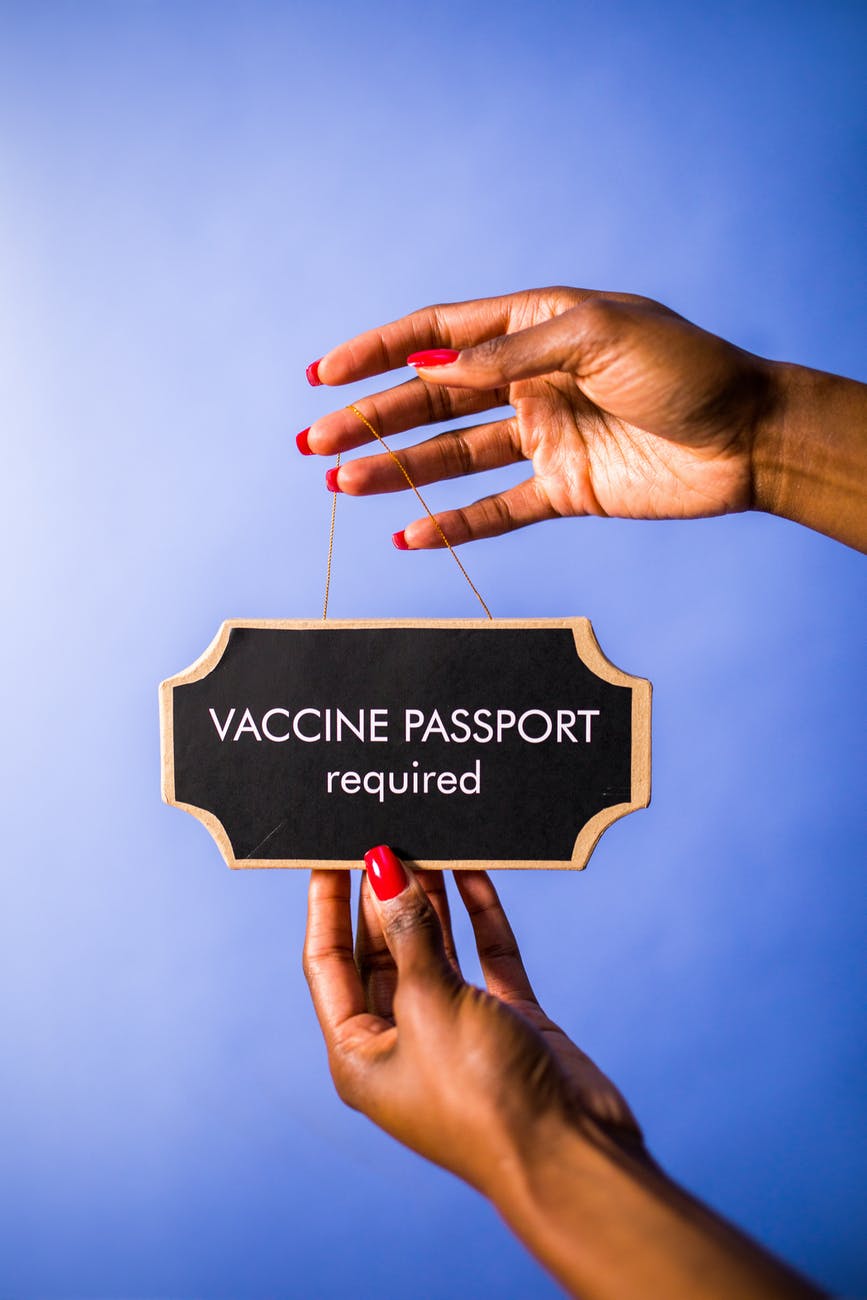
Let me see your ID?

Photo by RODNAE Productions on Pexels.com

Ken Roberts had reported in the Tuscaloosa News that the University of Alabama had lifted face mask requirements for students, faculty and staff who are fully vaccinated against the coronavirus. Roberts wrote:

All unvaccinated faculty, staff and students will still be required to wear face coverings inside all university buildings, according to UA’s announcement. Physical distancing of at least 3 feet will still be required.

There would be a record of anyone who had been vaccinated at the University Medical Center, but anyone getting vaccinations by other providers would need to report it to the university. The university had posted its latest status.

Other schools, such as Tulane, were trying incentives for vaccinations. Nola.com‘s Della Hasselle reported:

Tulane University, New Orleans’ largest private employer, is upping the game to convince workers to get vaccinated against COVID-19 by offering a $500 cash bonus to any full-time faculty or staff member who gets the vaccine by July 31.

Not long after the university’s announcement, Alabama‘s Governor Kay Ivy signed “legislation banning private business and public entities, including schools, from requiring proof of COVID vaccination to provide services,” as reported by the Montgomery Advertiser‘s Brian Lyman.

The idea of a “vaccine passport” was soundly rejected by most Alabama legislators. In his article, Lyman included the latest information on Alabama‘s rate of vaccinations:

The state still trails the rest of the country in COVID-19 vaccinations, despite pushed by Ivey and other officials. The Centers for Disease Control and Prevention says 36% of Alabamians 18 and older have received at least one shot, compared to 49% nationwide. About 76% of adults 65 and older have received one shot, compared to 85% nationwide.

Axio‘s Margaret Talev wrote about a recent poll about the lack of trust that most American’s had in the honesty of others about their vaccination status. She reported:

Americans are taking off their masks…despite significant distrust over strangers’ honesty about their COVID-19 vaccination status and amid major confusion over Centers for Disease Control and Prevention guidance on mask use and social distancing for those vaccinated.

According to CBS/42, Alabama State Health Officer Dr. Scott Harris was concerned about the consequences of people not having been vaccinated during the Memorial Day weekend. CBS/42 reported:

Despite the availability, Alabama lags behind other states in fully vaccinating its residents. According to the latest numbers from the Alabama Department of Public Health, just over 1.3 million Alabamians are fully vaccinated.

Meanwhile, Gov. Kay Ivey has ended the statewide mask mandate and just signed a law that prevents someone from having to show proof of vaccination or a so-called “vaccine passport.”

While Harris said he supports Ivey’s decisions, he knows that with the upcoming holiday weekend, people will be flocking together to celebrate.

“I think we’re asking Alabamians to please be responsible and do the right thing. I think most people will do that and we can expect there’s some people who won’t want to do that,” he said.

Short of some kind of vaccine passport, residents of Alabama would have to accept whether other people have been vaccinated on a “good faith” basis. In T-Town, there had been widespread use of fake IDs, even when there were significant penalties involved. With no penalties at all involved with someone lying about their vaccination status, people might be well concerned about whether someone who is not wearing a mask is among the 4.9 million Alabamians who are not fully vaccinated.

Standard

You can talk about “herd immunity” until the cows come home

Photo by Kat Jayne on Pexels.com

It was widely reported that Alabama‘s State Health Officer Dr. Scott Harris predicted that Alabama could reach “herd immunity” during the summer. WFSA/12‘s Lydia Nusbaum wrote:

Harris said Alabama could reach herd immunity by the summer depending on several factors. It depends on whether the state has the same level of vaccination as April and whether different variants continue to spread.

But there was a “catch.” The state really didn’t know what percentage of the population would have to be fully vaccinated to arrive at herd immunity.

The University of Alabama Birmingham‘s Dr. Suzanne Judd was quoted by Lauren Walsh in a ABC33/40 News report. Walsh wrote that “Dr. Judd stressed vaccinations are still important. We do not know how long immunity lasts for those who have had COVID.” Furthermore Walsh reported that Dr. Judd said that “vaccinating children will be critical for Alabama to reach herd immunity.”

Walsh wrote:

“If we count the people who have never had a positive test but have some level of immunity, then we would have reached herd immunity somewhere around May or June,” Dr. Judd said. “And we probably have, just looking at the fact that the cases are decreasing the way they are. The problem with only using that model is that those people may have- their immunity may fade.”

The duration of immunity for those who have had a Covid-19 infection is uncertain. And there have been cases of re-infection, according to Dr. Harris.

CNN‘s Holly Yan reported that “young adults are now steering the course of this pandemic as the biggest spreaders of coronavirus.” Yan wrote that “36% of young adults under age 35 say they don’t plan on getting a Covid-19 vaccine.” Without the vaccination of young adults herd immunity was considered to be unlikely.

The Montgomery Advertiser‘s Melissa Brown wrote that Alabama‘s Governor Kay Ivy had announced that the state’s coronavirus pandemic public health order and state of emergency would expire on July 6, 2021.

At the same time Al.com‘s Ramsey Archibald reported that Alabama could lose its unused doses of Covid-19 vaccine because of new guidelines from the federal government. Unused COVID-19 vaccine doses would be moved away from states with low demand into other areas. Archibald wrote:

Alabama had the nation’s second lowest vaccination rate, according to the Centers for Disease Control and Prevention. Less than 33 percent of Alabama’s population had gotten at least one dose of a vaccine.

The Hill‘s Alexandra Kelley reported that the U.S. Centers for Disease Control and Prevention (CDC) attributed increasing new infections to new Covid variants. The CDC had concluded that a “best-case scenario” for controlling Covid-19 would involve high rates of vaccination and “compliance with [nonpharmaceutical interventions].” Kelley wrote:

Speaking to CNBC, Peter Hotez, the co-director of the Center for Vaccine Development at Texas Children’s Hospital, said that the U.S. needs to have 75 to 80 percent of all Americans vaccinated to see pre-pandemic normalcy.

“We can vaccinate our way out of this epidemic if all the adults and adolescents get vaccinated by summer,” he said. 

The CDC‘s May 5, 2021 Morbidity and Mortality Weekly Report (MMWR) said:

The rapid rollout of vaccination is having a positive impact on the COVID-19 pandemic in the United States and reported disease nationally during April has been on the lower end of the scenario projections to date. However, multiple jurisdictions have seen a resurgence of COVID-19 cases and others likely will if NPI adherence declines too rapidly. Increases in deaths and hospitalizations could be more moderate because of prioritization of vaccination groups at high risk for COVID-19 but are still expected, particularly in locations with pronounced increases in transmission earlier during the vaccine rollout. These modeled scenarios show that ongoing efforts to continue to increase vaccination coverage and maintain physical distancing, masking, isolation, and quarantine are warranted. As the COVID-19 pandemic evolves and more data become available regarding factors affecting outbreak dynamics, future projections from the COVID-19 Scenario Modeling Hub can provide new and improved insights for public health response.

The idea that “herd immunity” would be possible under any conditions was disputed by many experts.

USAToday‘s Elizabeth Weise wrote an article “Is herd immunity to COVID-19 possible? Experts increasingly say no.” She reported:

Dr. Anthony Fauci, the nation’s top infectious disease doctor, doesn’t want to talk about herd immunity anymore.

“Rather than concentrating on an elusive number, let’s get as many people vaccinated as quickly as we possibly can,” he said at a White House briefing last week, a sentiment he’s since repeated.

What Fauci doesn’t explicitly state, but others do, is that with about a quarter of Americans saying they might not want to be immunized, herd immunity is simply not an attainable goal.   

“It’s theoretically possible but we as a society have rejected that,” said Dr. Gregory Poland, director of the Mayo Clinic’s Vaccine Research Group. “There is no eradication at this point, it’s off the table. The only thing we can talk about is control.”

With COVID-19, where vaccines are effective but won’t last a lifetime, vaccine hesitancy makes that kind of widespread protection unlikely, experts say.

That means people who can’t get vaccinated or whose immune systems are dampened by medication or disease will remain vulnerable. There will probably always be enough unvaccinated people to allow COVID-19 to spread once it arrives in a community.

Because of political attitudes towards vaccination, Weise wrote, “America could end up looking like a patchwork quilt, with areas where COVID-19 infections are low and others where the virus continues to thrive. The dangers of contracting COVID-19 are considerable. Among unvaccinated people who’ve tested positive for COVID-19, about 20% will end up with severe disease, 5% will end up in intensive care and between 1% to 2% will die, according to CDC data.”

US News & World Report‘s Cecelia Smith-Schoenwalder wrote that “the growing number of Americans protected from COVID-19 has returned focus to the idea of ‘herd immunity’ – a term some experts want to cast aside.”

Smith-Schoenwalder said that the problem of “vaccine hesitancy” complicated matters. She wrote that the Kaiser Family Foundation’s Vaccine Monitor had said that the “public’s enthusiasm for getting the shot may have reached a plateau.” She reported:

With cases, hospitalizations and deaths on the decline and over 40% of adults fully vaccinated, attention has returned to herd immunity – a concept that some experts would like to cast aside.

Herd immunity – or the point when enough people are protected from the virus that it cannot find new hosts to infect – has been a “counterproductive” term that has been “taken out of context by people who don’t understand the ins and outs of disease,” says Theo Vos of the University of Washington’s Institute for Health Metrics and Evaluation.

Many universities and colleges were mandating that their students have Covid vaccinations before they returned to campus. Andy Thomason  and Brian O’Leary in The Chronicle of Higher Education listed 228 schools that mandated student vaccinations.

Harvard University is among them. NBC/10‘s Kaitlin McKinley Becker reported:

Harvard President Lawrence S. Bacow said in a message to the school community Wednesday that students should plan to be fully vaccinated before returning to campus for the fall semester — meaning that at least two weeks have passed since receiving the final dose.

In a joint message with Harvard’s provost, executive vice president and the health services executive director, Bacow said students are being required to get vaccinated against the virus in order to reach the high levels of vaccination needed to protect the school community as Harvard hopes to be able to offer a less restricted, robust on-campus experience for all students this fall.

Unfortunately many schools throughout the nation had no such plans. Florida‘s Governor Ron DeSantis even signed a bill banning the practice of requiring proof of inoculation to attend any school that received state funding. The Tampa Bay Time‘s Jeffrey S. Solochek wrote about how schools in the Sunshine State were coping with DeSantis’ actions.

Students at the University of Alabama, who constitute approximately 30,000 of T-Town‘s residents when the school is in session, as yet would not be required to be vaccinated. There were no final plans on Covid mitigation for August when the 2021 Fall semester at the university will begin. At the university’s spring athletic events, many sports fans were no longer wearing masks, although athletes remained masked when they were not on the field. It was planned that Bryant-Denny Stadium would be at full capacity when the 2021 football season resumed. As many as 100,000 fans could pour into T-Town, the vast majority of whom will be unmasked and not socially distanced. A sizable number of fans will likely not have been fully vaccinated. And that any kind of “herd immunity” would have been arrived at by the first game on September 11, 2021, is uncertain at best.

Standard