Golf balls, Football & Booze

Photo by Steve Johnson on Pexels.com

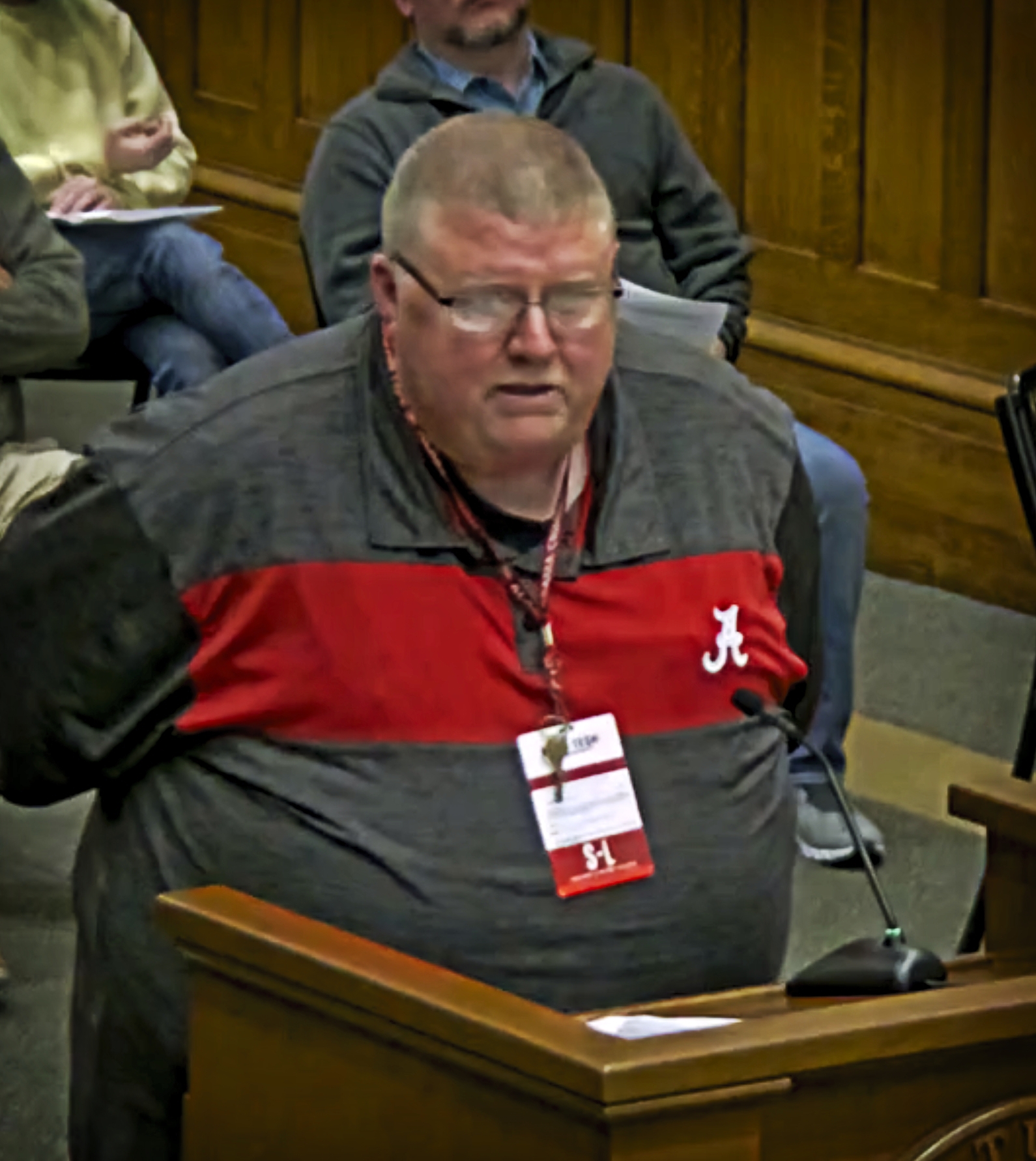
At the public hearing on approving a liquor license for Coleman Coliseum on February 8, 2022, a Tuscaloosa City Council member asked if there had been problems at other schools that had served alcohol at sports events. Herbert Tesh, the representative from Levy Premium Foodservice, had replied that he knew of no problems where his organization had been involved.

As the Tuscaloosa NewsJason Morton had reported, Alabama Athletic Director Greg Bryne had said, “We’ve been able to watch the other schools and the reporting we have gotten back from other schools is that alcohol incidents at their games actually go down once they sell because it’s a much more controlled environment.”

Bryne may not have been aware of the story that had been written by Adam Sparks in the Knoxville News Sentinel that had been published in February, 2022. The article “Tennessee sold $2.67M in alcohol at football games with Lane Kiffin’s return providing biggest spike” had reported: “Alcohol sales and fan misbehavior at Tennessee football home games were at their highest on the night trash was tossed on the field in a Vols’ loss to Ole Miss, university records obtained by Knox News show. Water bottles, beer cans and other debris were thrown on the field in an incident that paused the game for 18 minutes.”

Sparks had written:

There were 18 arrests and 51 ejections in UT’s game against Ole Miss. UT sold 47,890 alcoholic beverages for $547,726 in revenue at the Ole Miss game. Those numbers were the highest for a single game since UT started selling beer and wine at football games.

Media outlets, as far and wide as the NY Post and Sports Illustrated, had covered the story of Kiffen having been nearly being hit by a thrown golf ball. An Associated Press story in the NY Post had reported:

“I don’t know if I’m more excited that we found a way to win or that I didn’t get hit with the golf balls that they were throwing at me,” former Vols coach Kiffin told SEC Network, holding up a yellow golf ball.

“I still have my souvenir golf ball,” Kiffin said. “I also got hit with bottles with some brown stuff in them. I don’t think those fans would waste moonshine. You’ve got one of the most passionate fan bases in America. A call didn’t go their way.”

Sparks had reported in 2021, that: “Tennessee has been fined $250,000, which will be deducted from the university’s share of SEC revenue distribution, for the incident at the end of the Ole Miss game, when fans tossed trash on the field to protest the officials’ call.” The over $547,00 revenue in alcohol sales that had been generated at the game could have made the penalty more bearable.

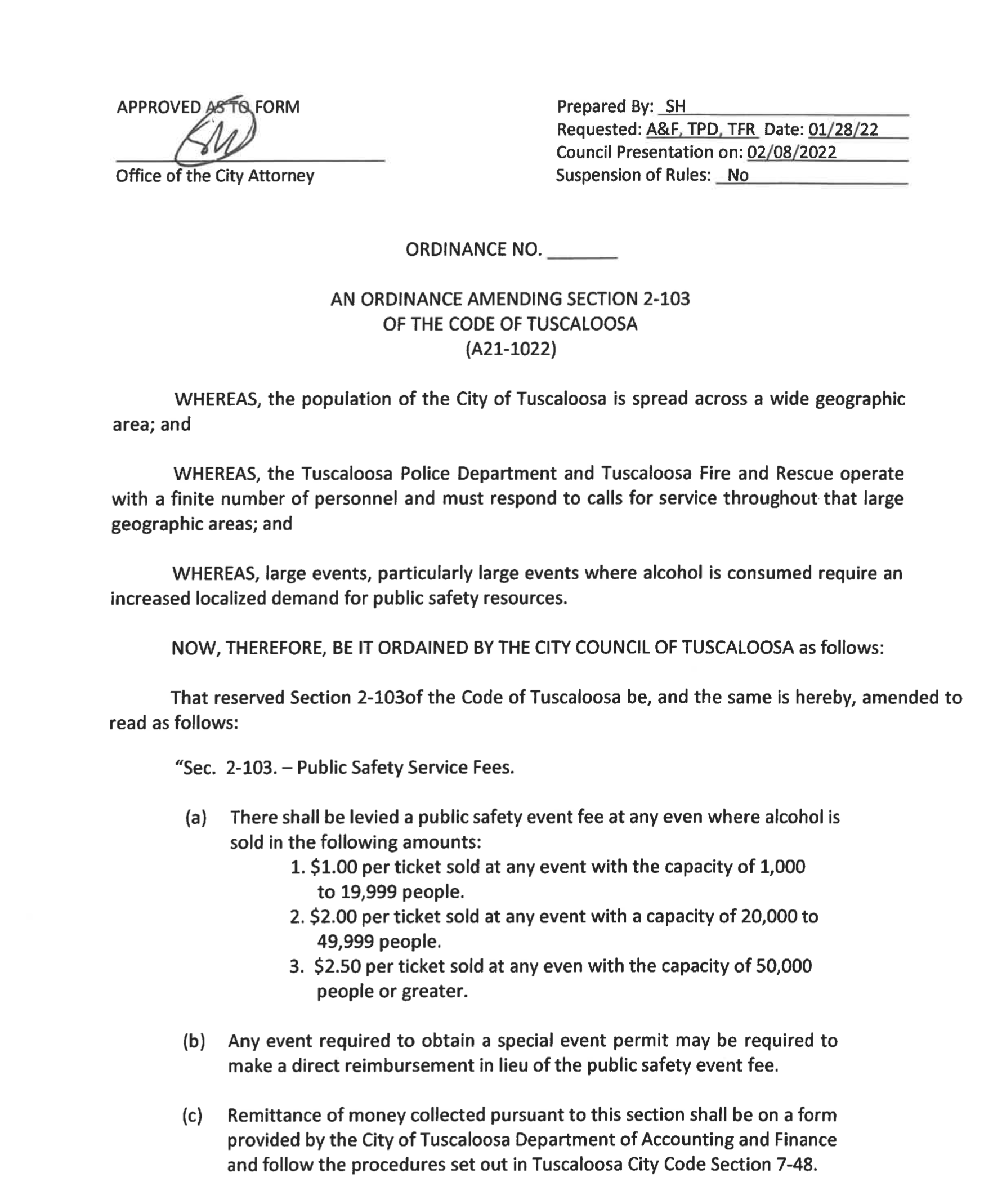
On February 8, 2022, the Tuscaloosa City Council had voted to pass an ordinance amending Section 2-103 of the city’s code. The ordinance was based on the need for funding “increased localized demand for public safety resources.” It established public safety fees, that would be assessed on a per ticket sold basis. Before it had passed, Council President Kip Tyner had amended the ordinance. Instead of there being a $2.50 fee for each ticket sold for an event that had 50,000 or more attendees, where alcohol could be sold, the fee would be $3.00.

The initial discussions on such a public safety fee had occurred during the city council’s budget meetings. On August 27, 2021, Mayor Walter Maddox had proposed the Fiscal Year 2022 operating budgets. The public safety fee had been proposed as a way to increase in pay for Tuscaloosa Police and Tuscaloosa Fire Rescue. The fee would be one dollar added to any ticketed event where alcohol was sold.

The Tuscaloosa NewsJason Morton had reported on September 25, 2021 on the adoption of the city’s fiscal 2022 operating budget. He had included: “A $1-per-ticket fee on ticketed events of more than 1,000 people where alcohol is sold, such as a concert at the Tuscaloosa Amphitheater, will now be imposed.”

The ordinance that the city voted on in February 8, 2022, had stated that the public safety fee would be needed because “events where alcohol is consumed require an increased localized demand for public safety resources.”

During the public hearing on February 8, the food service’s representative Tesh had said that “hawking” (the selling of alcohol by concession stand workers to seated fans) at football games might be a possibility in the future if the council would approve such sales.

The three dollar public safety fee that could be added to ticket charges for Alabama football games, should the city council approve alcohol sales at Bryant-Denny Stadium, would of course be paid by fans whether they drank or not.

Perhaps, if the fee would defray the cost of additional security at football games were added, fans might welcome it. A specter of irate, drunken fans pelting opposing teams with debris at Bryant-Denny Stadium in T-Town might be less of a possibility than at Neyland Stadium in Knoxville,Tennessee. After all, Alabama’s football coach Nick Saban has lost few games there. But arrests for drunk and disorderly conduct or intoxication at college football stadiums where alcohol is sold have been commonplace. An extra three dollars might seem well worth it to many fans who might encounter an obnoxious drunk in the stadium.
Standard

No Comment?

Photo by Torsten Dettlaff on Pexels.com

An email had been sent to the Tuscaloosa City Clerk regarding the public hearing on alcohol sales at Coleman Coliseum at the University of Alabama.

On the city’s website it had been stated that “there’s no need to attend in-person. Submit a written comment by emailing cityclerk@tuscaloosa.com. Written comments will be distributed to the Councilmembers for the next scheduled meeting and kept on record.”

This was the content of the email that had been sent to the clerk on the week prior to the hearing:

Will the city be legally liable for approving the license for Levy Premium Foodservice LP to serve alcohol at the Coliseum should a minor be served and, as a consequence, suffer bodily harm.

There is no liability insurance that covers injuries that stem from illegal service, such as selling or providing alcohol to minors.

Won’t the University or licensing body (the Council) share liability with the vendor, who is uninsured for this?

A 2008 WebMD article addressed problems with underaged drinkers at professional sports venues. “Underage or drunken fans are often able to buy alcohol at sports stadiums, especially if it’s purchased from a vendor in the stands, according to a study. The study, by University of Minnesota researchers, shows that underage fans are able to purchase a drink 18% of the time and intoxicated fans are able to purchase a drink 74% of the time at pro sports stadiums. Both groups are 2.9 times more likely to succeed in their purchase attempts if they buy from someone in the stands as opposed to going to a concession booth.”

Having an area where beer is sold and consumed apart from the seats might make it more likely that alcohol not be served to minors.

But surely the city is aware of the problem with hard to detect fake IDs? Alcohol may still be sold to minors even when IDs are checked.

The email’s subject was Comment for Tuesday’s Public Hearing on alcohol sales at Coleman Coliseum

One Council member had said that he not been aware of the email, although during the hearing Council President Kip Tyner had said, “There have been a lot of comments that I know we’ve all received–some for and some against…”

The City Clerk had responded to an email that had been sent to her inquiring why the comment in the email had not been been read at the hearing:

Your previous email did not request for your comment to be read into the record for the alcohol sales at Coleman Coliseum. However, I apologize for any miscommunication and will confirm with you on future matters to ensure your concerns are addressed.

In the past year public comments that had been sent by email had been routinely read into the record.

During the hearing, only Herbert Tesh, the representative for Levy Premium Foodservice, had spoken to the Council. Tyner had then addressed the Council members. He had said, “Any further discussion before we vote?” A vote had then been taken, with only one Council member not voting in favor of the licensing. Then City Attorney Scott Holmes had reminded Tyner that the approval of the license was on the agenda as a public hearing. Tyner then had said, “Anybody here want to speak for or against the alcohol application?” No one present at the hearing had responded. The comment that had been emailed to the clerk had not been read. Apparently a re-vote had not been required, although Tyner had jumped the gun earlier by not asking for comments before the vote had been taken. WBRC/6‘s Bryan Henry had written, “We checked with city council records, and […] no one has signed up to speak in favor or against the application.”

One of the answers that Tesh had been asked concerned the potential for illegal sales to minors. He had said that an issue with the women from the Alabama Beverage Control Board, who he had just spoken with, would be the purchase of alcohol for minors by legally aged patrons. He had said that IDs for purchasers would be checked. “It just makes sense, it’s easier and it takes the guess work out of it. It’s going to make a few people upset, but at the end of the day if you want to have a beer, you’re just going to have to show your ID.” Tesh did say that “hawking” beer at football games might be a possibility in the future. Beer, wine and seltzers at Coleman Coliseum would be only be sold at concession stands or kiosks.

Although it had not been mentioned during the public hearing, concern over policing the sales of alcohol during sports events at the coliseum and at other large events would lead to the consideration by the Council of adding public safety fees to ticket sales at large events where alcohol was being sold.

CBS/42‘s Phil Pinarski and Jen Cardone had written that Council President Tyner had said that the money from ticket sales would be discussed by the Council the following week. “If we can do it to strengthen our men and women in blue and all the men and women in the fire department then I think it’s a good thing.”

The resolution had that said that the police and fire departments had a “finite number of personnel” and that at large events where alcohol would be served there would be an increased demand for “public safety resources.”

Just how city employees would have been able to contribute to public safety at such events had not been delineated. Would they assist in checking IDs or by following alcohol purchasers to their seats to insure that only the buyers of the beverages would consume them? Would incidents of disorderly conduct by inebriated fans be a consequence of alcohol use? Would there be an increased fire hazard? Would the University’s police force require such assistance?

There had been a considerable amount of opposition in T-Town to alcohol sales at sport events at the University. It had been expressed on social media posts. However no comments had been allowed to be read into the record at the Council meeting. Perhaps they would have been “kept on record”?

Standard