Pork Rules In T-Town!

The tornado in April of 2011 tore a swath of destruction along Tenth Avenue in Tuscaloosa. Since then the City has been using Housing and Urban Development ( HUD ) funding to rebuild. An impressive low-income housing project, which was already planned before the storm, has been built. It can’t be denied that such use of HUD money was in the public’s interest.

Initial discussion at City Hall about the use of the old storm-damaged property that was formerly used for a U.S. Armed Forces Reserve Center on Tenth Avenue included its use as a park. Now a $9 million dollar facility for the West Alabama Chamber of Commerce will occupy that space. This use of federal money was not entirely the brainchild of Senator Richard Shelby, a stellar provider of pork to the University of Alabama and the City of Tuscaloosa.  The City and the Chamber hit on him for federal money.  City Recovery Operations director Robin Edgeworth according to The Tuscaloosa News “said that the city began the grant process from the Department of Commerce several months ago with the support of Shelby, his staff and Tuscaloosa’s congressional delegation.”  A local park named after his wife was one recent Shelby sponsored project, but he is primarily known for “earmarking” more than $100 million for the “revitalization” of downtown Tuscaloosa.

The Washington Post reported: “The project razed four square blocks to build a new parking deck, a park plaza and a federal courthouse. It also repaved streets, buried overhead cables and installed new sidewalks and ornamental lighting. Shelby owns an office building downtown. The street in front of his office will also be made over along with other streets as part of phase two of the project, also funded by his earmarks.”

The $5 million that Shelby secured from the Department of Commerce to match the City’s $4 million in “disaster relief” money doesn’t transform this project into one that is in the public’s interest. The thinking at City Hall was probably that an “impressive” edifice housing the West Alabama Chamber of Commerce’s EDGE “business incubator” will be built on one of the key corridors leading into town ( which is a common route to Bryant-Denny Stadium ). It was also a sweetheart deal for The Chamber which has truly metastasized into the city government.

The HUD funding and the use of the land owned by The Department of Defense is supposed to be contingent on its being used in the public interest. The efforts of the Chamber’s EDGE to “incubate” business thus far has produced less than impressive results that could hardly be described as being in the “public’s interest.” Will a new multimillion facility somehow produce better results?  Would not the HUD money have served a better purpose in being spent for affordable housing or some other purpose actually related to storm recovery?

In T-Town pork barrel politics yet survives even when there is talk of a looming, austerity-driven federal government shutdown.

Standard

The More Things Change, The More They Remain The Same?

Image

With the Crimson Tide’s football season beginning in earnest it would be reasonably thought that all thoughts on campus would be centered on the fortunes of Coach Nick Saban and his brave gridiron warriors. For at least nearly three quarters of the Colorado State game most students in the student section were interested enough in the football game to remain in Bryant Denny Stadium. A headline for an article in The Tuscaloosa News was Students don’t hang around in Alabama’s win against Colorado State

Athletic Director Bill Battle had hinted that poor student attendance at games might result in a policy change for students. It was reported in The Tuscaloosa News that he said, “If we can’t solve the problem we may reduce the student section,” That’s not off the table, but we don’t want to do it.”

Even football coach Nick Saban had published a letter in the student newspaper The Crimson White exhorting students to support the team: “Bryant-Denny Stadium is one of the toughest places to play in the country because of the atmosphere our students and fans help create. You make a huge difference in terms of how our team responds each Saturday. Sometimes the result of a game may come down to a single play, and we all have a role in what the result of that play may be. You have an impact, whether it is the noise on third down when the opposing team has the ball, or the energy you provide for the players when we try to win the fourth quarter.”

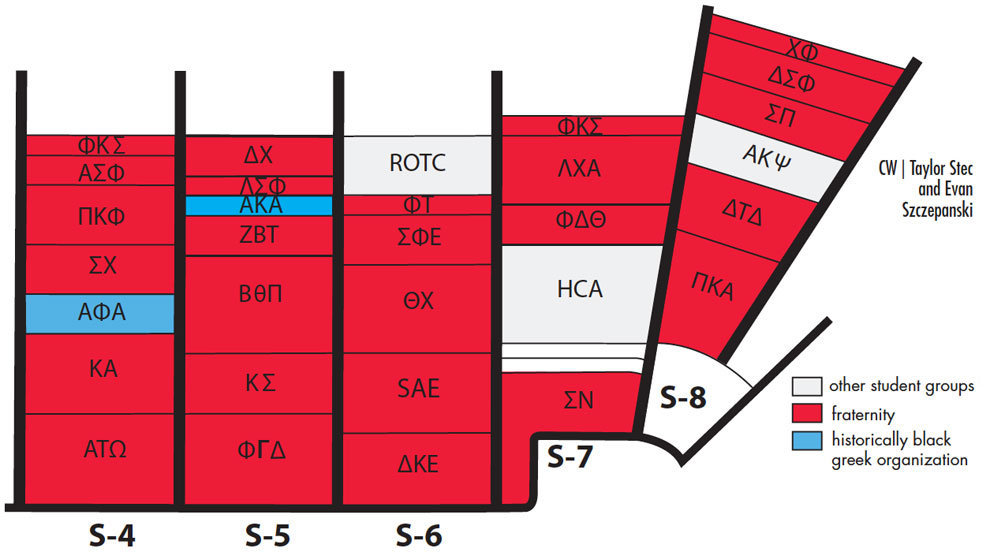
In an attempt at encouraging student “diversity” after the controversy about traditionally white sororities having discriminated against black pledges the “block seating,” aka “student organization seating,” at Bryant Denny Stadium  was suspended for last weekend’s first home game for The Crimson Tide.  Last year new student seating rules looked as if they might curtail the  hegemony of fraternities with ties to The Machine. The Crimson White reported: “Some fraternities that belong to the Machine, a secret political coalition of traditionally white fraternities and sororities, saw their seating placement deteriorate after the implementation of the automated process.” But, other than the change in seating placement  things remained much the same. “All but six of the 34 organizations that applied for block seating are exclusively male greek fraternities.”

In spite of the “open” seating at the hard fought Colorado State game the student section by halftime began to empty. It was never completely full. By the end of the third quarter about half of the student seats were empty. The game’s outcome for most fans in the stadium was far from certain until the fourth quarter but many of the students seemed to have other things on their minds.

Members of the Faculty Senate at the University seem to also have something other than the fortunes of the football team in mind. Many in in the Senate would like to throw a monkey wrench into The Machine at the University. According to Ed Enoch in The Tuscaloosa News the Faculty Senate “is scheduled to resume discussion today of a statement urging action by the UA administration following recent allegations of voter fraud by Greek organizations during the recent Tuscaloosa municipal election and racial discrimination during sorority recruitment.”

An article University of Alabama officials tread lightly on segregation by Associated Press reporter Jay Reeves provided some insight on the discrimination issue:

Some critics seem rankled by what they see as leaders’ apparent hesitancy to confront the problem more directly. Cleo Thomas Jr., an Anniston attorney who became the first black student government association president at Alabama in 1976 and later spent 19 years as a trustee, said administrators before Bonner have taken more direct actions to confront campus problems linked to fraternities and sororities. In 1993, Thomas said, then-President Roger Sayers temporarily shut down the Greek-controlled Alabama SGA over allegations of wrongdoing in campus elections that included a cross-burning. And just last year at Alabama, Thomas said, administrators under then-President Guy Bailey suspended fraternity pledge periods amid allegations that new members were being hazed.

Brandt Montgomery, a minister at an Episcopal church in Tuscaloosa, was among the hundreds of people who marched against segregation in Greek groups during a campus demonstration last week. Montgomery, who is black, was wearing a jersey with the Greek letters of a mostly white fraternity, Lambda Chi Alpha. Montgomery said he not only joined the group while attending the University of Montevallo, a small liberal arts school south of Birmingham, but was elected president by the majority-white chapter. “It was just never a big deal in our chapter,” he said.” I don’t understand what is going on here.”

The University of Alabama, whose President Judy Bonner has direct ties to The Machine, has made a few gestures towards eliminating racial discrimination in sororities on campus. But as far as the “voter fraud” charges are concerned, only the Faculty Senate seems to think that the University has any business being involved.

Students could register to vote within ten days of the municipal election and participate in the voting process under state law which has no “durational residency requirement.” ( There is a part of the Code of Alabama, 11-46-38, where a thirty day residency requirement is stipulated but it is likely to be superseded by the newer requirement. ) Students who even registered after the ten day registration requirement could still cast provisional ballots. There was no way to verify if a registrant is living within the voting district that would be voted in at the time of registration. Representatives of The Machine were allowed to carry stacks of mail-in registration forms onto the campus for the Greek students that they controlled to fill out. There was no analogous avenue for registration for the general student population.


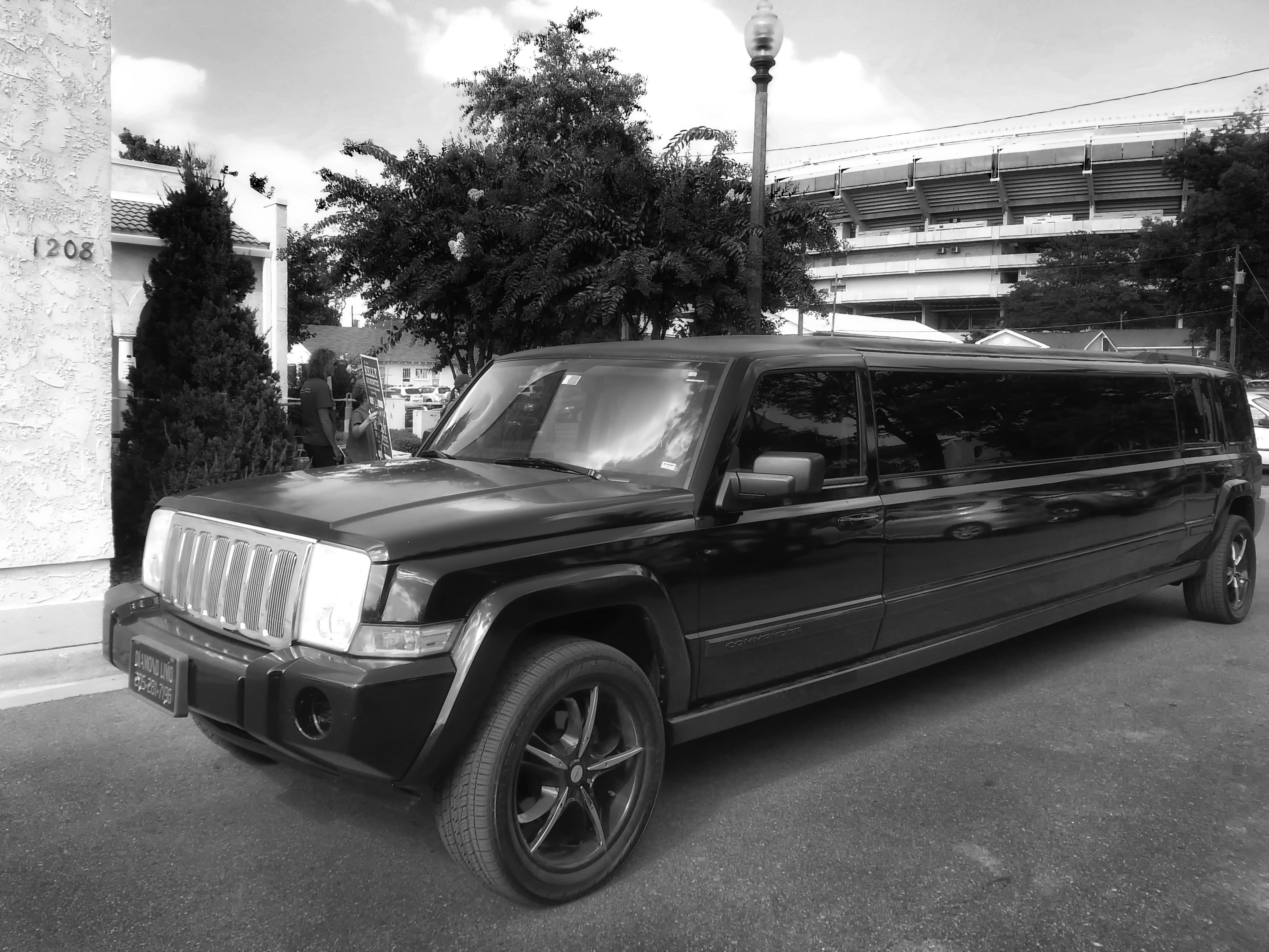
Whether the apocryphal stories of Greeks being given drink vouchers to be used at two Machine friendly bars or points in the University’s Panhellenic system for voting are true or not, students from the rows of fraternity and sorority houses registered in droves immediately before the election. They rode in limousines to the polls and piled out of them to vote in a local school board election for Machine endorsed candidates.

It may all boil down to the fact that many privileged University students from posh neighborhoods in the state or elsewhere have a sense of entitlement. They believe that, just as their parents felt, that they should control the shots. The peons who live in the community that have children in school should bow in homage to the might of The Machine. So should the University’s administration … and even the Faculty Senate. For surely the faculty members who dare squeak in protest will be brought to heel. And things will get back to normal at the University of Alabama and the city that it controls.

Standard

Is it just damage control or will The Machine not forever reign at the University of Alabama?

Image

Not too long a go a foul-mouthed email written by a Delta Gamma sorority member in Maryland went viral. And she had to resign. Ironically  the email from the Delta Gam sister was all about another fraternity swathed in controversy at the University of Alabama–the Sigma Nus. Those were the good old days.

Now University of Alabama President Judy Bonner’s affiliation with the Delta Gams is more likely to be mentioned on Facebook.  First it was reported by Melissa Brown that “women in the university’s sorority system were offered free alcohol to go to the polls and were encouraged to vote for school board chair candidate Lee Garrison and Cason Kirby, a recent UA graduate who is an attorney in the area. Kirby was running to unseat Kelly Horwitz for District 4’s seat on the city school board.” And an article by Stephen Dethrage stated that “Voter registration records show that 45 women who registered to vote in the city’s election within 48 hours of one another all listed as their residence the same University of Alabama sorority row address — 707 Magnolia Drive, which is the Delta Gamma house.”

Delta Gams of course were not responsible for all of the election chicanery. For example, there were over 10 unrelated Sigma Nu fraternity brothers who were newly registered to vote using the same address – 42 University Circle.

Judy Bonner was instrumental last year in recolonizing the Delta Gams on the campus and she also was a contributor to one of The Machine candidates Lee Garrison. Whether or not any of this besmirches President Bonner’s reputation is a matter of personal interpretation.

Bonner has recently spent more effort on another matter entirely. She has been trying to do damage control on allegations about segregation in the University’s Greek system. Melanie Gotz, an Alpha Gamma Delta member, gave an interview to the University’s student paper The Crimson White that ripped the sheets off the hot bed of racial prejudice at the Alpha Gamma Delta house. Much of the problem was actually attributable to alumnae and not the current crop of sorority sisters.

The New York Times has reported on the reaction to the controversy in an article At Alabama, a Renewed Stand for Integration:

For this rendition of Stand in the Schoolhouse Door, there were no National Guard troops or presidential edicts.

Tracey Gholston, a black woman who is pursuing a doctorate in American literature at Alabama, said Mr. Wallace’s legacy continued to permeate the university, which has nearly 35,000 students, about 12 percent of them black, and 45 percent from out of state.

“It shows a thread. It’s not just something that was resolved 50 years ago,” said Ms. Gholston, who has a master’s degree from the university. “You can’t say, ‘We’re integrated. We’re fine.’ We’re not fine.”

The demonstration came one week after the campus newspaper The Crimson White published the account of a member of the university’s Alpha Gamma Delta chapter.

After a private meeting with advisers of the University’s sororities Bonner released a statement: “As we have said, the University is working with our local chapters and national headquarters to remove barriers that prevent young women from making the choices they want to make. Our meeting this evening with chapters advisers is another step forward in that process. We are unified in our goals and objectives to ensure access and choice to all students, and to doing the right thing the right way.”

In Molly Olmstead’s  Tuscaloosa News article Civil rights veterans share stories with University of Alabama students”  the comments of two civil rights veterans were reported:

Constance Curry and Doris Derby, two women who worked in the Student Nonviolent Coordinating Committee during the 1962 civil rights movement, encouraged students to take risks in challenging racial issues on campus.

The two women ended by addressing issues of power and money at play in allegations of segregation in sororities and fraternities and unethical campaigning behavior by Greek organizations in the recent board of education elections. They listed demonstrations and the formation of social justice groups as possible outlets for change.

Derby said it is the students’ responsibility to effect change. “If you all get together, you’ll come up with something.”

After all of this hullabaloo over racial discrimination at the University of Alabama dies down it remains to be seen whether the Greek system will finally be integrated. But for many people it is far more important that the University rein in The Machine, which has interfered with the democratic process in a local school board race.

Machine members are among those trying to piggyback onto the segregation issue. According to an article in the Crimson White Alumni speak against discrimination though advertising”:

Kenneth Mullinax, an alumnus who served as Paul “Bear” Bryant’s student assistant for two years, was a member of a fraternity and an officer in Theta Nu Epsilon, otherwise known as the Machine, said he and Sherrel Wheeler Stewart were responsible for organizing this ad with signatures from greek, independent, black and white alumni at the University.

There is even an attempt to erase the bad impression that many of the Greeks create at Crimson Tide football games. The Greeks have been notorious for leaving Bryant-Denny Stadium to go party before the football game is over. According to a report in The Tuscaloosa News, Student Government Association President Jimmy Taylor has suspended “block seating” in the student section for one game:

“I feel it is my duty as SGA president to foster togetherness and represent all students. With this in mind, I feel it is appropriate to suspend Student Organization Seating for this Saturday’s football game against Colorado State. As a university, we have seen significant growth in recent years; however, as we continue to grow bigger, we must also grow better. This Saturday is an opportunity for all students to come together with a common goal, and we can begin by cheering on the Alabama football team together as one university.”

Of course Jimmy Taylor as an operative of The Machine was busily retweeting in the waning hours of the municipal election day to get out the vote for his fellow Machine candidate Cason Kirby.

Screen Shot 2013-09-19 at 6.33.49 PM

Will Judy Bonner’s and the University’s ties to The Machine be too strong for any effective action against the Machine’s dominating University politics and controlling who is elected in Tuscaloosa District 4?

Standard

Greeks Gone Wild?

Image

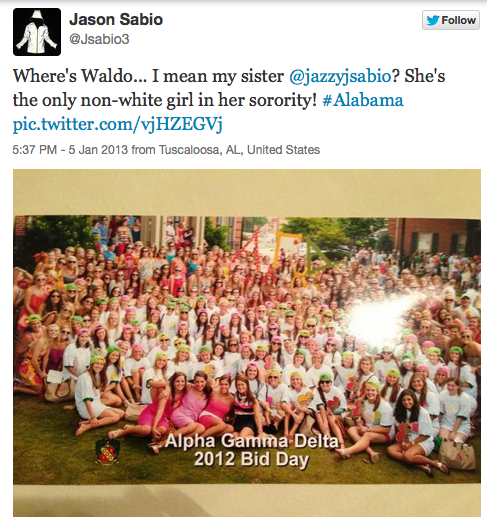
In recent days it has been rumored that national journalists  who were dressed undercover as college co-eds had  been poking around the sororities at the University of Alabama. As the above tweet may illustrate there aren’t many Afro-Americans girls in the traditional sororities at the University. But recently the granddaughter of a University Trustee was allegedly black-balled during rush. This has resulted in an avalanche of national media attention. You name it. The story’s been everywhere from the The New York Times, Huffington Post and The Business Insider to CNN and MSNBC’s “All In”

Of course there’s always the Total Frat Move News, that always does an unequaled reportage of all things Greek in a somewhat appropriate vernacular. TFM reported about  the sorority crisis, which was initially uncovered in  the University’s student newspaper The Crimson White, in the post “Every Sorority At Alabama Blackballed Two Black Girls For Being Black; What A Goddamn Joke“:

Sorority formal recruitment recently came to a close at the University of Alabama. While many bright, sweet, and presumably qualified young girls received bids to one of the 16 sororities involved in recruitment, two bright, sweet, and presumably qualified young girls, one whose grandfather is on the university’s board of trustees and the other whose father is apparently a renowned politician on the state level at the very least, did not.

It would be incorrect to assume that 200 hundred racist girls sat in every sorority house on campus while the secretary said, “Snaps if y’all hate blacks…okay by the volume of snapping that appears to be a majority, our sisterhood remains as white as our pearls for another year! Great job, y’all!” The bigger picture that the Crimson White story paints pretty clearly is that the sorority alumnae appeared to be the main players in the discriminatory recruitment. Girl after girl interviewed by the Crimson White claimed that they would have been happy to welcome a black girl into their sisterhood, but that their alumnae advisors weren’t having it.

Does that mean this can all be blamed on racist old alumnae who will gasp, clutch their handkerchiefs, spill their tea, and snap shut their checkbooks should they find out about a black girl joining their sorority? Close, but not quite. While I’m sure racism that’s as pure as the driven white snow all these old ‘Bama sorority alums would like the color of their sisterhoods to remain is a largely contributing factor, the bigger factor seems to be much pettier, and SO much more pathetic.

The funding from these rich alumnae of varying ages likely won’t disappear simply because their sorority signs a black girl. Instead, the checks will stop coming in because the alumnae, being the amazing sisters that they are, don’t want to back a loser, er, losers. As it happens, nothing makes your sorority a bigger group of losers at Alabama than signing a black girl, just ask Alabama’s Gamma Phi Beta chapter (who I’m sure are all actually sweet girls and I’m sorry for calling you losers it’s just for the story, I swear, let’s have drinks sometime). 

Why did Gamma Phi’s alumnae supposedly “cut all funding” after the actives bid a black girl in 2003? If they were donating before that, and many likely were, it doesn’t make much sense to sabotage your own investment, let alone what you consider a dear sisterhood. In that case, you’ve wasted all the previous money you donated, not to mention you’re, you know, screwing over your sisters. If these alumnae actually wanted the sorority to succeed (and clearly they don’t unless it’s totally on their terms), wouldn’t they instead power through the INSURMOUNTABLE AND TERRIFYING obstacle that is signing a black girl? The only thing that makes sense in this scenario is that the alumnae wouldn’t think any contribution they made could overcome the CRIPPLING BLOW of signing a black girl, because the sorority would be, socially speaking, too far gone, thus any future contributions would essentially be money wasted.

The drama about a racist sorority rush followed the accusations that the University’s Greek community had decided the outcome of a local school board race by being lured to the polls by the promise of free booze. It seems that racism trumps political chicanery since the national media paid scant attention to The Machine’s manipulation of the student vote.

All of this Greek drama might lead to some scrutiny of the unique relationship of Greek life with the University of Alabama. Fraternities and sororities at the University are not private institutions. There’s a symbiotic relationship between the powers-that-be in the University’s hierarchy and the Greeks. Of the over 30,000 students attending the university nearly 30% are in fraternities and sororities. It might be reasonably thought that the perception that the University is a Greek-centric, heavy-drinking, partying school is useful for the recruitment of the many out-of-state students that are the University’s lifeblood.

Many of the newer fraternity and sorority houses rival in size the structures set aside for academics at the University. At a recent meeting of the school’s board of Trustees millions of dollars in loans were approved for the construction of new buildings for the Greek community. And twenty-six acres were acquired for the University’s expansion. The Greek mansions reside on University owned property. They have been described as “exclusive social clubs” and their unique status on campus has been questioned. A few lonely voices have called for their “privatization.” Of course to many people that would be akin to asking that church property be taxed.

The University’s President Dr. Judy Bonner, who was a member of the Beta Psi Chapter at the University, was instrumental last year in bringing Delta Gamma back to the campus. She and honorary member of Phi Delta Theta Fraternity, University Chancellor Dr. Robert Witt recently contributed to the campaign of a local school board candidate backed by The Machine. The University has had a “hands-off” policy on the allegations of students participating in voting fraud in the recent election.

As far as the discrimination during sorority rush is concerned the University has not indicated what, if any, measures will be taken. Deborah M. Lane, Associate Vice President for University Relations, said, “The University administration, the members of our local chapters and the vast majority of our alumni fully believe that this is the right time to do the right thing, and we are committed to ensuring that all students have access to and can choose from multiple opportunities that match their personal interests and goals.

The University of Alabama may not deserve the image of a school with “Greeks Gone Wild.” Perhaps the majority of students who are Greek lettered are disgusted with The Machine’s election shenanigans and any racial discrimination in membership practices. But, unless the University’s administration pulls in the reins on the alumni and students who are perpetrating the old stereotypes of racism and dominance by The Machine, it will lose all of the credibility it still has.

Standard

Free Alcohol For Votes?

I voted billboardKirby Polls-bwLimo-bw

Cason Kirby, who received the most votes in the District Four Tuscaloosa School Board race, has denied all the charges in incumbent’s Kelly Horwitz’s lawsuit that contested the election’s outcome.

Kirby stood outside the polling place on election day while munching on a sandwich and watched the limos pull up carrying his student supporters but he saw no illegalities. He’s probably baffled by the new billboard that has a glass of booze next to a recliner. Newly elected School Board Chair Lee Garrison, who Stan Pate considers a “La-Z boy,” also reputedly benefited from The Machine vote that helped elect Kirby. There were widespread reports of booze being offered for student votes. The billboard asks: “Free Alcohol FOR VOTES?”

The University of  Alabama’s Faculty Senate addressed the administration’s response to the student voting controversy. An article by Mark Hammontree in the University of Alabama’s student paper “The Crimson White” reported:

“One member of the committee quickly voiced his frustration with the timing of administration’s response. ‘Clearly, they caved into pressure, otherwise we wouldn’t have gotten a statement at all,” John Vincent, a professor of chemistry, said. “That [email] could have been written the day after. I have no problem with what was in it, but the timing is typical of what’s been happening currently, in the last two to three years with the administration.”

“Vincent said the election controversy is just a result of the current culture surrounding the administration. ‘What we have is symptomatic of a long period of lack of leadership in the administration and student affairs that has been allowing these things to just continue and build, and we’re seeing the newest manifestation of it,’ Vincent said.

“The discussion turned away from the municipal election to focus more on campus-specific examples of the issue Vincent spoke of, including the Machine and SGA politics. ‘The Machine has existed for over a hundred years, and no one has been able to rein it in,” one member of the committee said.

“Vincent and others suggested the Faculty Senate could use the negative public opinions generated by the elections to urge the administration to address the broader issues facing student life and campus politics, even if the administration cannot get involved in the municipal election. ‘We can go to the administration and say, “This thing has to take its course, but what’s your long-term plan to deal with what’s broken in the student government, with the fraternity and sorority system; what’s happening across campus in terms of things with students affairs; what are you going to do to work on that?”‘ Vincent said.”

Standard

The whole truth and nothing but the truth

Image

The affirmation “I do solemnly, sincerely and truly declare and affirm that the evidence I shall give shall be the truth the whole truth and nothing but the truth” may soon be repeated in court by a hundred or so students who cast ballots in the School Board election in District 4. Cason Kirby supporters standing outside of the Calvary Baptist Church Annex on election day never dreamed that some of them might be standing in line at a courthouse.

A statement on a legal challenge of the election for the District 4 seat on the City Board of Education released by Kelly Horwitz on September 6 said:

“My complaint alleges that a large number of votes cast in District Four were cast by individuals who are ineligible to vote in that district. Perhaps inadvertently in many instances, and deliberately in other cases, individuals voted in the district despite the fact that they had not resided in the district for the legally required length of time, or registered at addresses which they did not live. I believe that these votes were wrongly cast, wrongly constituted a margin of victory for my opponent, and wrongly disenfranchised the legitimate voters of District Four, including both students and longtime residents of Tuscaloosa’s downtown neighborhoods. I also believe that many votes violated Alabama election law because they were cast in exchange for the promise of alcohol or other things of value, and are subject to disqualification.

“This is a simple election challenge. The court will examine individual votes and voters to ensure that they voted in accordance with the law and will disqualify them if they did not. Other individuals have raised broader concerns about this election and some of the conduct that took place. It seems likely that no matter what happens with this legal challenge, those concerns will continue to be voiced in other forums. But my concern is a simple, legal one: that elections be free and fair, and that all votes counted be lawfully cast votes. We will follow the evidence wherever it leads.”

Standard

Voting Was No Picnic!

Image

The District Four School Board member vote was very close — 416 to 329–with challenger Cason Kirby getting the most votes. Incumbent Kelly Horwitz is contemplating a challenge of the election results. She has a good reason to suspect that a hundred or so of the votes were cast illegally by students at the behest of the University of Alabama’s notorious Machine. The team of challenger Cason Kirby  got a little too close to the District Four Chief Election Inspector’s car while picnicking and were chased away but otherwise they had a great day.

As they scarfed down their sandwiches they witnessed droves of  Kirby supporters empty out of limos. Could they possibly have known that many of them had been promised booze for their votes?  Well, unless there’s a way to prove it, that’s a moot point. But whether all of the votes cast for Kirby were by people who resided in the district is another thing entirely.

If inspections of the voter list show that a hundred or so votes might be subject to disqualification because of people having not established their residency the voters in question might be hauled into court to testify who they voted for. And lying in court about that sort of thing could result in a felony charge.

“Any person examined as a witness may be required to answer if he or she voted at the election contested and to answer touching his or her qualifications; and if he or she was not at such election a qualified voter, he or she may be required to answer for whom he or she voted. If he or she makes full, true answers which may tend to incriminate him or her, he or she shall not be prosecuted for voting at such election.” ~ Code of Alabama Statute 17-16-42 

The final election results might well hinge on whether the students who voted illegally for the Machine candidate Kirby will also lie in court for him.

Since Kirby was a no-show at the first School Board meeting to be held after the election perhaps the fact that his apparent lack of interest in education — having never ever attended a School Board meeting — is indicative of his uncertainty over whether all of The Machine votes will count.

Standard

The Chamber’s Pot Gets Bigger

Any money that that comes from ADECA’s $49.2 million appropriation from the U.S. Department of Housing and Urban Development (HUD) is supposed to be used in the public’s interest. It might not be considered in the public interest by everyone to use disaster relief funds to  build a $3.5 facility, the EDGE — Center for Entrepreneurship and Innovation business incubator, to be used by the West Alabama Chamber of Commerce.

The property to be used for the EDGE is a freebie too. There were negotiations to acquire the storm damaged Armed Forces Reserve Center  property from the Department of Defense to be used for the Chamber’s EDGE facility. The Department of Defense regulations also require that the property be used in a way that will provide a public benefit.

The first three businesses that were “incubated” at the EDGE were: Forza Financial ( a nonprofit business operated by students that issues micro loans), Southern Traditions Apparel ( a clothing company that produces shirts for sorority and fraternity events on campus ) and Zambooki, LLC ( a contractor referral company that also offers web development and business strategy services ).

In 2012 the Tuscaloosa City Council’s Public Projects Committee endorsed the use of the center’s property for use as a public park, after The University of Alabama could not use the damaged structure for a garage for its fleet of school-owned vehicles and  its environmental health department. In 2009 the use of the old military facility for a Housing Authority’s social services center for homeless families was considered. The Transit Authority would have also used the depot and maintenance area for its bus maintenance facility.

Now the City of Tuscaloosa has finally found a way to allow the West Alabama Chamber of Commerce to get a piece of the disaster relief pie. In recent years the City has been increasingly snuggling up to the Chamber is an ever more cozier relationship.

In 2012 the City gave the Chamber an annual $175,000 contract to manage its economic development. The Chamber’s CEO Jim Page explained, “This structure is new to this area, but it’s pretty common throughout the state and throughout the country.”  Page, as vice president for public policy and business development at the Decatur-Morgan County Chamber of Commerce, had a similar economic development arrangement with that smaller city in Northern Alabama. The West Alabama Chamber has had a University of Alabama centered orientation for economic development. It’s business journal is even called The Rising Tide. The Chamber has never seen a student housing project proposed by an out of town developer that it didn’t like. The City has usually seemed to concur with the Chamber’s sentiment. However, due to a perceived glut of new high density student housing, the City has now formed a student housing task force.

All the low lying ( student housing ) fruit may have been already plucked but now the Chamber has its EDGE toy to look forward to. Many citizens of Tuscaloosa would probably prefer a public park to be located on the old armory property and that the disaster relief money be spent on providing more affordable housing, not only low income housing. The average resident of Tuscaloosa would not be able to pay the rent at the kind of housing the Chamber has supported.

Standard

Not a single dime!

Chamber Board member Mark Sullivan wrote a letter-to-the-editor which was intended to exonerate The West Alabama Chamber of Commerce from accusations of “buying” the election.

“I am on the board of the chamber, serving as its past-chairman, and I can attest that the chamber did not contribute a single dime to any candidate for this race or for any other municipal race, either directly or through a PAC. There are business people who chose to give of their own means to support candidates who they believed would do the best job of serving our children, and I am one of them.”

Mr. Sullivan was not not a contributor to the controversial Educate Tuscaloosa Political Action Committee ( ET PAC ) which contributed large sums of money to challengers of three incumbent School Board members. However contributing to the ET PAC were the Chamber’s Governmental Affairs Chair and Board member Jordan Plaster ( $2,000) and Board member Terry Waters ( $1500 ). The ET PAC received $5,000 from the Advantage Realty Group, which is represented by Alice Maxwell on the Chamber Board.

One of the challengers to School Board incumbents supported by the ET PAC was the Chamber’s Board member Renwick Jones. Norman Crow, Chamber Board member and Chair of the Chamber’s  Public Affairs Council, was unopposed in District 3 after Sena Stewart decided not to seek reelection.

Undoubtedly the Chamber’s Poohbahs in the not too distant past came up with the idea of “plausible deniability.”  It was decided that the Chamber’s FUTURE PAC, which had contributed to School Board candidates in past elections, would not dole out money this year to candidates with Chamber ties.

After all the Chamber had set a new priority “The Chamber will recruit seasoned business leaders to seek elected office on local boards of education, beginning in 2013, to significantly improve the policy-making, financial management and operations of local public school districts.” 

Added to that priority should have been that the Chamber will never admit that it supported any candidates, even those who might be on its Board. Also, Chamber members should be sure to contribute to any other PAC than the Chamber’s FUTURE PAC in 2013.

Standard

Rage Against The Machine

The Machine Graphic by John Earl
Image

Since the Tuscaloosa municipal election on Tuesday there has been controversy over The Machine‘s role in the election. Whether the Elections Division of the Alabama Secretary of State or the Attorney General’s office will investigate is another matter entirely.

An email sent to  members of the University of Alabama’s Chi Omega chapter offering them drinks for votes has been widely distributed. Referring to the two candidates supported by the University’s Machine, Lee Garrison and Cason Kirby, the email said, “Both of these guys are absolutely qualified for these positions and we need to do our part by going out to support them. (P.S: if you wear your “I voted” sticker you will receive a free drink at Moe’s and Innisfree on election night…so seriously, go vote)”

Melissa Brown reported: A second University of Alabama Greek email has surfaced in which a ranking fraternity officer offers free drinks to members to vote in the Tuscaloosa City Board of Education while specifically advocating support for two board candidates.

“If you all get out and vote, Cason will win,” the author writes. “This is a smaller election and your vote will make a difference. I wouldn’t send out these emails and get y’all registered and shit if it wasn’t for a good reason. It barely takes any time at all and there are a lot of other people you’ll know that are getting in the limos.”

Like the Chi Omega email that surfaced Wednesday, the message stated members could get rides to the polls in chartered limousines and would also receive wristbands for free drinks at Innisfree and Moe’s, local bars where vote parties were hosted. Innisfree had no comment for AL.com reporters Wednesday.

The fraternity leader told members to go to the polls regardless if they were registered to vote in Tuscaloosa or not and encouraged them to use provisional ballots to cast their votes.

Buying votes with alcohol isn’t exactly kosher. It’s a Class C misdemeanor to “buy any vote of any qualified elector at any election … by the gift of intoxicating liquors” according to the Alabama Elections code.

Stephen Dethrage further reported: “Voter registration records, provided to AL.com Wednesday by the Secretary of State’s Elections Division, reveal that more than 60 percent of people who signed up to vote in District 4 in 2013 were college-aged women who did so during the last week of registration. … the total number of women who are 23 or younger who registered to vote in District 4 at the last minute was 219, accounting for more than 60 percent of the people who signed up to vote in District 4 in all of 2013.
Seventy-six of the August registrants listed a total of four different houses on Magnolia Drive, UA’s Sorority Row, as their residential address. Ten men and a woman listed their residence as 42 University Circle, a home near campus. Twenty-two voters came from units in the East Edge apartments, a student housing complex that opened in 2012, and 10 voters registered from the University Downs complex.”

Law professor Paul Horwitz, who is the  husband of School Board candidate Kelly Horwitz, sent a message to the University of Alabama’s Faculty Senate yesterday:

“I do not seek to tar members of the Greek system with a broad brush. The Greek system is certainly a longstanding part of the university, and I’m sure that many fine individuals, including friends of mine, participate in it. But neither can there be any question that the relationship between the university and the Greek system is not a healthy one.

“As for the ‘Machine,’ it is difficult to talk about an organization that takes such a lack of pride in itself that it continues to deny its very existence–while, every now and again, sending out one or two people to explain to the press that it’s really not a big deal. I suppose if it didn’t exist, it would by definition not be a big deal! But it does and it is. Its conduct yesterday was atrocious and illegal, and it besmirched the university–all of it, including its faculty and leadership–every bit as much as it did itself.In important ways, our university is corrupt.
“Both the Greek and Machine questions have of course come up many times before. But they have not been addressed with clarity, tenacity, and a willingness not to stop until the issue is fully and completely aired in the open and addressed forcefully.
“In important ways, our university is corrupt. It seems to me that it is the duty of the Faculty Senate to arrest this corruption. Dealing with these issues is in my view an obligation, and one that we should take on–not just this year, but until we are done–as a signature issue of the Faculty Senate. I would add in that light that I am a little disturbed on two counts. The first has to do with the credibility of the university leadership. Both President Bonner and Chancellor Witt made sizeable donations to at least one of the Machine-backed candidates.
“An even greater cause to be disturbed is the lack of will and resolve on the part of the university administration when it comes to issues involving, inter alia, the Machine. These issues arise from time to time, are not firmly addressed, and continue to haunt us on a regular basis–as yesterday’s law violations demonstrate. It is our job as the Faculty Senate not to rest until the university leadership, including President Bonner, Chancellor Witt, and the board of trustees, have shown a full measure of a quality they have seemed too often to lack: courage. Otherwise, people of good faith who give all their time and effort to making this university great will continue to have reason to wonder just who runs the university, and whether anyone does at all.”
Standard