The End of the Machine’s Block Voting Gambit?

Photo by cottonbro on Pexels.com

Many students had been too busy hitting the books to care about such things as who sat on the local school board in 2013.

Repercussions of the Tuscaloosa 2013 municipal election have had consequences.

The impact of the student vote in Tuscaloosa had never been consequential until 1997 when an undergraduate student had devised a surefire formula for electoral success.

The 2013 Franklin Stove Blog‘s post “Judgement Day & The Machine” described the gambit of mobilizing student votes:

In 1997 an undergraduate student who was President of the University’s Inter-fraternity Council Lee Garrison was able to secure a seat on the Tuscaloosa  City Council with the help of The Machine Vote at the University. Coming from a well known Tuscaloosa family Garrison garnered support from families living in its Historic District neighborhoods, as well as the support by University students in the Greek system.

In his first year on the Council Garrison attempted to use The Machine’s vote to prevent the School Board from becoming an elected body by adding a “straw poll” on alcohol use to the referendum on electing the board. His last minute effort to register students was the subject of a 1998 story in the Tuscaloosa News in which the AEA representaive Walt Maddox, who successfully ran for a seat on the Council in 2001 and for Tuscaloosa’s Mayor in 2009, was quoted.

“It’s no coincidence, Maddox said, “that the nonbinding referendum votes include alcohol sales. That would be the single most motivating factor to bring college students to the polls. It is also no coincidence that Mr. Garrison. who serves on the City Council, is registering voters to vote not only on the alcohol issue but also on the elected board referendum.  I would imagine that Mr. Garrison is instructing the students to vote against an elected school board.”

In 2013 Garrison had purportedly used the Machine vote to become Chair of the School Board. District Four candidate Cason Kirby, who also was thought to be a Machine candidate, unseated incumbent Kelly Horwitz in the same School Board race.

During a Pre-Council meeting at Tuscaloosa‘s City Hall Garrison, after having arrived late, had approached the City Clerk. He had demanded that signs directing students to the proper polling place be put up. He had said that many students had been showing up at the wrong polling place. The Clerk had then explained that he should take up the issue about signage with the Board of Registars.

Neither Garrison or Kirby ran for re-election. According an article in the Tuscaloosa News by Drew Taylor, Garrison had found the position “more challenging” than he had thought it would be.

On January 19, 2022, the Crimson White‘s Carson Silas had written a story about the Tuscaloosa City Council‘s vote to postpone the municipal election until May. He had provided background on the Council’s resolution:

The resolution was proposed to address questions about election security that have persisted since a contested 2013 Tuscaloosa City Board of Education election, which saw University alum Cason Kirby gain the District 4 seat over incumbent Kelly Horwitz.

In a lawsuit challenging the election results, Horwitz alleged that “offers to bribe, bribery, intimidation or other misconduct” contributed to Kirby’s win. Reports of illegal voting activities during the 2013 election included 10 individuals registered to vote at a single address, and sorority and fraternity members being offered free alcohol to vote for Kirby.

After Horwitz’s case was dismissed in the Tuscaloosa County Circuit Court, the Alabama Supreme Court granted Horwitz’s appeal in a 7-2 ruling, stating that 159 ballots should have been rejected in the 2013 election on the basis of unfulfilled residency requirements.

The date of municipal elections was changed to the first Tuesday of March following approval by the Alabama Legislature in 2015 in an attempt to curb future election security issues.

The Tuscaloosa NewsJason Morton had explained the rationale for the proposed election date change. He wrote: “Mobilization efforts in past elections have helped sway the outcomes based on the votes of temporary or transient residents, many of whom don’t live here long enough to face the consequences of their electoral actions.”

A 2013 post in the Franklin Stove Blog (FSB) had given details about the Political Action Committee (PAC) that had provided most of the funding for the candidates who were attempting to unseat School Board incumbents:

If you drive through the neighborhoods in Tuscaloosa’s District 4 where University of Alabama students live you’ll see signs that support candidates who are running for the Tuscaloosa School Board. There are probably some students who have an abiding interest in educating Tuscaloosa’s children. But many of the signs are in dwellings inhabited by Fraternity or Sorority members. They are likely the same people who support the Machine candidates in the Student Government Association races. District 4 has recently been redrawn in a way that gives University students more clout. The 38 percent of students at the University who are Greeks vote as a bloc.

The Educate Tuscaloosa Political Action Committee ( ET PAC ) has provided most of the campaign money to three candidates who are running for the School Board.

The FSB’s post “Judgement Day & The Machine” had elaborated on funding by the ET PAC:

Political operative and long-time Garrison ally and Pi Kappa Phi Fraternity alumnus Mike Echols, Chair of Friends of Lee Garrison in 2013, formed the Educate Tuscaloosa Political Action Committee ( ET PAC ) as a part of a strategy to take over Tuscaloosa’s School Board. All five challengers to the School Board incumbents were given the lion’s share of the over $70,000 raised by the ET PAC. Three candidates for the School Board were given over 85% of their funding by the PAC. Despite the largesse poured into the coffers of the challenging candidates by the ET PAC and large amounts of  money from other sources only Cason Kirby in District 4 was successful in unseating an incumbent.

Cason Kirby, who received over $14,000 from the ET PAC alone, was victorious in his race against School Board incumbent Kelly Horwitz, but not because of the size of his campaign chest. His win can be attributed solely to the support of The Machine. The District 4 polling place was swamped by students, many of whom were wearing tee-shirts commemorating the Greek Fest, the Old Row or displaying other Greek themes. They came from Tennessee, Oregon, Georgia, California and other states to vote for candidates who were running in a  local school board race in Alabama. The students were required to return to their Houses wearing the “I voted” stickers that they were given after voting. One person sympathetic to Horwitz said that she wished she could have stood outside the polling place with a roll of stickers and handed them out to students to save them the trouble of casting ballots.

T-Town has had a unique problem with student voting. It had not been so much a problem with students having voted in municipal elections. (Although it had seemed strange that so many university students were interested in who sat on the local school board.)

The crux of the problem had been the power of The Machine at the University of Alabama. Over thirty percent of the university’s students were affiliated with Greek organizations but certainly the number who were pawns of The Machine had been far less.

Still, by generating hundreds of votes in an election where the turnout was only in the hundreds, The Machine had been able to exert a significant impact on politics in T-Town. Members of Greek organizations affiliated with The Machine had doubtlessly been sanctioned for not voting. It was not the same thing as an unregimented block vote by an interest group.

According to a poll worker, during the 2013 municipal election, a student had left the District Four polling place before voting. She was so frustrated that she had been in tears. She returned after being escorted back by two other students and voted.

The Crimson White‘s Isabel Hope in November 18, 2021, had written about how The Machine had “fixed” campus elections. She had described the student apathy that had allowed Machine backed candidates to prevail. Why would students who had no interest in campus politics have flocked to the polls to vote in a local municipal election?

Whether changing the voting date for local elections would have been considered a form of “voter suppression” had been a contentious topic in T-Town. One thing had been clear: politics had always created strange bedfellows. Mark Twain had been falsely credited with having said –“If voting made any difference, they wouldn’t let us do it.” Still in T-Town many people seemed to have had agreed with that sentiment.

Standard

Back to the Future?

Photo by Pixabay on Pexels.com

AL.com‘s Ramsey Archibald had reported on December 30, 2021: “The state continued its breakneck pace to close out 2021, and it seems Alabama will ring in the new year with an unprecedented COVID surge. Thursday’s record number of cases brought the state’s 7-day average to 3,628 new cases per day. That’s a 368% increase in cases since Dec. 21, just nine days ago.”

The University of Alabama (UofA) had finally responded to the new threat that the Omicron Covid variant poses. On January 3, 2022, a staff report “University of Alabama reinstates mask mandate for spring semester” was published in the Tuscaloosa News.

AL.com‘s Ruth Serven Smith on December 29, 2021, had written that both Auburn University and the University of Alabama at Birmingham would require universal masking when classes resume.

The UofA’s latest update had included this stipulation: “Unvaccinated individuals must continue to wear a mask indoors and in outdoor crowds.” It also had included: “College of Community Health Sciences Dean Dr. Ricky Friend continues to emphasize the effectiveness and importance of interventions like vaccinations, boosters, and wearing well-fitting masks in all public locations.”

It had been uncertain just how many UofA students had been fully vaccinated, much less had gotten boosters. The university’s Covid Dashboard had only provided the percentage of students who had at least one dose of the COVID-19 vaccine.

Other universities had responded to the the highly contagious Covid variants in various ways. Scott Jaschik in Inside Higher Education had written about college campuses throughout the nation that had instituted remote learning:

Since the University of California campuses decided to move online, many other campuses have followed. Among them: Agnes Scott, Bellevue, Jarvis Christian, Morehouse, Rhodes and Spelman Colleges; American, Columbia, Emory, Gallaudet, Georgetown, George Washington, Hampton, Kean, Loyola Marymount, Marymount (Virginia), Michigan State, Oakland (of Michigan), Oakwood and Seattle Universities; and the Universities of Colorado at Boulder, Connecticut, Hawaii system (most classes), Miami and Pittsburgh.

Associated Press‘s Laura Unger had written: “People might mistakenly think the COVID-19 vaccines will completely block infection, but the shots are mainly designed to prevent severe illness. Doctors say to wear masks indoors, avoid crowds and get vaccinated and boosted. Even though the shots won’t always keep you from catching the virus, they’ll make it much more likely you stay alive and out of the hospital.”

A case in point about the inability of vaccines to block infection would have been the aftermath of the Bad Bunny performances in Puerto Rico, where more than 2,000 people tested positive for Covid after attending stadium concerts on December 10 and 11, 2021, as had been reported by Endi. According to Billboard‘s Jesssica Roiz, “organizers require[d] that all concert attendees show proof of COVID-19 vaccination or an official Vacu-Id provided by CESCO Digital. They have also implemented mandatory masks, even when on the field and during the concert. Those who don’t wear a mask will be removed from the event and fined $100.”

Many in T-Town may have had a legitimate concern about a repetition of last year’s celebration of Alabama‘s football team having won the College Football Playoff to become National Champions. On January 11, 2021, as reported by NBC NewsYasmine Salam: “Football fans flooded the streets of Tuscaloosa, Alabama, to celebrate the University of Alabama’s championship win against Ohio State University on Monday night, despite increasing Covid-19 cases in Alabama as well as neighboring states.”

With there being an even more infectious Covid variant amidst a Covid surge, the prospect of unmasked, unvaccinated, or partially vaccinated celebrants in the streets seemed to be a trepidatious way to start 2022.

Standard

The big “O”

Photo by CDC on Pexels.com

How would T-Town fare in the new year?

One thing that had cast its shadow on the horizon of 2022 was the COVID Omicron variant — the big “O”.

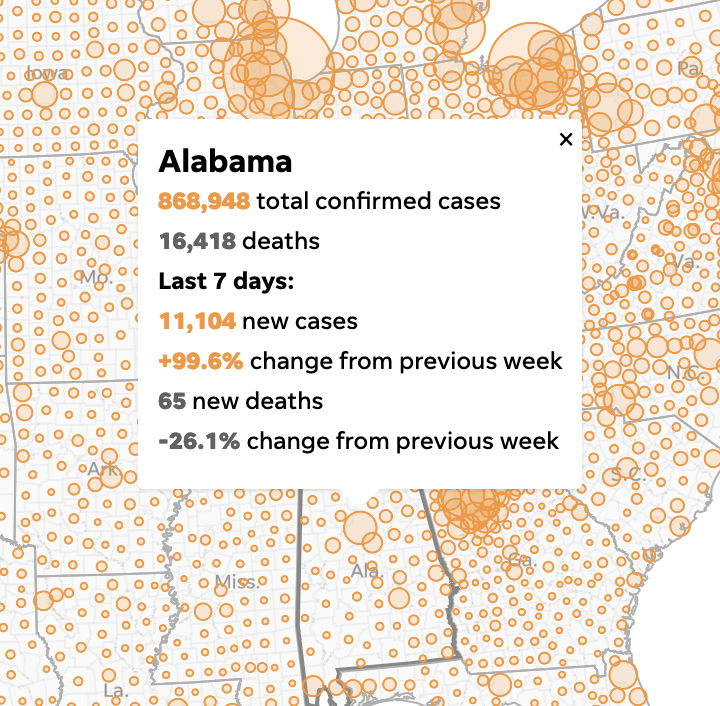
Alabama, at the end of 2021, had been classified as being at high risk of COVID transmission.

On December 23, 2021, Birmingham Watch‘s Virginia Martin wrote: “The state has a 12% positivity rate, meaning 12 of every 100 COVID tests returned positive results. That’s more than double the rate at the beginning of the month.”

Alabama Political Reporter‘s Eddie Burkhalter had reported: “Public health experts say the percentage positivity should be at or below five percent or cases are going undetected. Alabama’s average daily percent positivity over the week ending Dec. 15 was 5.5 percent, and by Tuesday had increased to 9.7 percent.” He also had written: “Alabama has the third-lowest percentage of residents fully vaccinated against COVID-19 in the nation, and the second-highest COVID death rate per capita, according to the Centers for Disease Control and Prevention.”

On December 26, 2021, ABC/33 NewsDiamond Nunnally had given an assessment by the Alabama Department of Public Heath:

“The entire state is now at a high-risk of community transmission. Not every county is high-risk, but majority of counties are,” said ADPH District Medical Officer Dr. Wes Stubblefield.

“The last time I saw, we only had four that had been typed but we would assume this is all Omicron and it’s just increasing and going through the population, potentially the vaccinated and the unvaccinated,” Stubblefield said.

From USAToday Tracking Map– December 22, 2021

Alabama Political Reporter‘s Eddie Burkhalter had Tweeted on December 27, 2021 that Alabama had experienced a 198% growth in its 7 day average of daily positivity over two weeks. (18.2% on December 26, 2021)

Gary Cosby, Jr., in the Tuscaloosa News, had reported on how local leaders had responded to the COVID pandemic since March 2020.

He had interviewed Tuscaloosa‘s Mayor Walt Maddox:

“It’s hard to say, but, yes, knowing what I know now, we would have probably implemented a citywide mask ordinance instead of looking at different types of curfews or shutting down different types of businesses or activities. Today, we know that wearing the mask is one of the great ways to mitigate the virus itself and keep society moving. We didn’t know that then. In fact, early on it was told to us by federal and state officials that masking wasn’t going to be that effective. In their defense, I think they were trying to prevent a run on masks to save them for the medical community. But the mask in and of itself would have been able to limit the number of restrictions that were put in place.”

On December 23, 2021, Kaiser Health News had provided information about how COVID had been impacting colleges and universities.

News outlets report more educational establishments have chosen to shift to remote learning when the spring term starts, in the face of covid outbreaks. Other reports say college football is in “chaos” over game forfeits due to the pandemic, and the potential impact of omicron surges on the championship.

Columbia University, Duke University and the University of California at Los Angeles will start with remote classes in January, part of a growing number of colleges choosing a temporary pivot online as coronavirus cases rise and the omicron variant spreads nationally. (Svrluga/Washington Post))

The organizers of the biggest games of the college football season have reached a decision that once would have sounded completely ridiculous: The winner of the national championship this season may not even have to step onto the field. With the Omicron variant surging, the possibility of disruption to the college bowl season is high. On Wednesday, for example, Texas A&M said it doesn’t have enough available scholarship players and will no longer play in the Gator Bowl, which is scheduled to be held on Dec. 31 in Jacksonville, Fla. (Wall Street Journal)

In December 2021, in T-Town, to many people, little had seemed to matter more than the College Football Playoffs.

Bama Central‘s Katie Windham had reported on Alabama Football coach Nick Saban‘s presser prior to the Cotton Bowl in Dallas. When he had been asked about the impact of COVID on two members of his coaching staff who had tested positive, Saban said:

[W]e’re using the same protocols that we used in the past, you know, for COVID situations, and they will do all their work and coaching virtually with players, very similarly to the way I did it when I tested positive before the Auburn game a year ago. They will join us, I think, the evening of the 29th or 30th, or whenever their time is up, before the game. So, they’ll be here for the game, and, you know, I think that they’re both doing well. No one is, you know, really that bad sick that they can’t function and do things that they need to do with our players.

Saban also said that the whole team had been vaccinated and 92% of the players have had the booster shot for COVID.

The Crimson White‘s Ainsley Platt had reported in November 2021, that the University of Alabama had lifted its mask mandate, in spite of high transmission rates in the surrounding area of Tuscaloosa County. Throughout the nation, in response to the Omicron variant, colleges had been requiring that students not only have been vaccinated but have received booster shots as well. It was highly possible that most students at the University of Alabama had not even been fully vaccinated. The University’s Covid-19 Dashboard had never provided that information.

In the Utah newspaper, the Daily Herald, Ashtyn Asay had opined: “With the spread of the Omicron variant, and COVID-19 cases at an all-time high in states across the U.S., the future feels uncertain as we head toward the new year.” The Utah County Health Department had been urging citizens to wear masks indoors, maintain a distance of 6 feet from others, and to get vaccinated.

There had doubtlessly been the same uncertainly about the pandemic in T-Town about the new year.

Standard

“I’m Gonna Yack…Cigs, Weed & Black Girl”

Once Photo by Mauru00edcio Mascaro on Pexels.com

In December, 2021, the University of Alabama once again had found itself in the headlines over the racist behavior of members of its Greek community.

A December 11, 2021, article in the University of Alabama student newspaper The Crimson White by Ainsley Platt had reported that the President Katherine Anthony of the Alpha Phi sorority and another of its members Kylie Klueger had been ousted from membership. The sorority, founded in 1872, was the fourth oldest national women’s sorority.

Platt wrote that the sorority’s president Anthony had texted from inside a Tuscaloosa bar: “I’m gonna yack, it smells so bad in here.” Klueger had responded, “cigs, weed and black girl.”

AL.com‘s Ruth Serven-Smith had reported that the racist incident involving a sorority had been “the third to go public in recent years.”

Even the New York Post had covered the story. Joshua Rhett Miller had written that some of Alpha Phi members had “told the newspaper anonymously they plan to leave Alpha Phi” because of the incident.

A Franklin Stove Blog post “Built by Bama” on January 18, 2018, posed the question: “Is racist behavior at the University largely a product of its segregated Greek system.”

In 2019, Al.com‘s Abby Crain had written about the “significant strides” that had occurred at the University of Alabama in combating racism. Still its Greek system had remained virtually segregated.

Time magazine’s Cady Lang wrote about how RushTok had amplified University of Alabama sororities’ problems with racism:

The obsession with RushTok, however, also serves as a cogent reminder of the longtime critiques of the racism, elitism and sexism embedded in many Greek life organizations. In universities across the U.S., sororities and fraternities have faced reckonings in the wake of hazing violence, sexual assault and even death. In 2020, following the murder of George Floyd, several students and alumni across the nation at multiple schools called for reform when it came to racial discrimination in Greek life, which, as TikTok user Cedoni Francis noted in a viral video, is based on being exclusionary, often along race and class lines. Some former Greek life participants went so far as to leave their fraternities and sororities in protest, while other organizations were disbanded entirely.

Historical Transactions, a blog established as part of the commemoration of the Royal Historical Society’s 150th Anniversary, posted about how the Greek system was “racially problematic.” The post said that “‘Greek Life’ is a distinctive part of the social and cultural experience of universities in the United States, and has faced recent scrutiny for acts of racism, sexism and homophobia.”

The blog provided historical background on Greek organizations:

In 1909, a member of the Kappa Alpha Order (KA) – one of the oldest Greek-lettered societies that idolises the supposed ‘gentlemanly’ values of Confederate general Robert E. Lee – wrote a dispatch in the fraternity’s journal about his time visiting Cornell. This was the university where the first intercollegiate Black fraternity (Alpha Phi Alpha) had been founded three years earlier. Alluding to his fraternity’s white supremacist values, the KA member expressed surprise that Cornell’s white students had not demanded segregated gymnasiums, since it was in these spaces that ‘the contact [between the races] was most offensive.’ Historically, KA members performed minstrelsy at fraternity events, openly idolised the Reconstruction-era Ku Klux Klan, and flew the Confederate battle flag at half-mast in defiance of court-ordered racial integration.

Vox‘s Maryam Gamar wrote about students who had experienced Greek racism on campus. He interviewed Emily Shiroff who had attended Vanderbilt University:

It’s intimidating because those in Greek life are the most powerful students on campus. It’s like an extension of high school — the same social hierarchy exists. Girls who were in the popular cliques join sororities, and guys who were on the football team join frats. They have money, social capital, and influence, so it can be scary.

I think abolishment is possible. At a school like Vanderbilt, it’s going to depend on how educated the incoming freshmen are about the problems inherent in Greek life. But there will always be schools where people don’t really care about the issues that they’re perpetuating.

The Greek system at the University of Alabama had always been thought by many people to be too big to abolish. According to the university’s division of student life: “With over 10,000 students, the UA Greek community comprises 35 percent of the undergraduate student body and is home to 68 social Greek-letter organizations. Since Fall 2011, The University of Alabama has held the coveted honor of being the largest fraternity and sorority community in the nation with regard to overall fraternity and sorority membership.”

Outbreaks of racism at the university had been accepted by many as an inevitable part of the Greek tradition, as much as Alpha Phi‘s “fragrant Lily of the Valley and the blue and gold Forget-Me-Not” had always been.

Standard

Deaths by Greek Life

Photo by Pixabay on Pexels.com

Kalhan Rosenblatt with NBCNews reported on November 28, 2021 that a University of Nevada, Las Vegas, 20 year-old student died of brain injuries after he took part in a boxing match held by a fraternity.

A lawyer for the student’s family released a statement: “We will leave no stone unturned to determine how a 20-year-old ended up in a school-sanctioned amateur fight that cost him his life.”

Such a story about the death of a Greek student would be an anomaly. Many of the deaths that have occurred on campuses had been the result of “hazing.”

NBCNewsBen Kesslen wrote: “Since 2000, there have been more than 50 hazing-related deaths. The causes are varied — heatstroke, drowning, alcohol poisoning, head injury, asphyxia, cardiac arrest — but the tragedies almost always involve a common denominator: Greek life.”

Many of the deaths that Wikipedia had attributed to “hazing” have involved the misuse of alcohol, such as in the case of “an 18-year old pledge from Roswell, Georgia, [who] was taken to the hospital after an alleged drinking game hazing ritual known as ‘Bible Study’. He was pronounced dead the same day.”

The University of Alabama has had a strict policy against “hazing.” In spite of that, throughout the years hazing had persisted on campus.

In 2012, Ashley Chaffin wrote in The Crimson White, the student newspaper at the University of Alabama, about a “culture of hazing.” In 2012, WBRC/6‘s Brianne Denleyn reported that “the university had suspended all fraternity pledgeship activities after hazing allegations were made against 10 fraternities.”

In 2015 AL.com‘s Jeremy Gray‘s article “University of Alabama hazing case: Students suffered burns, told to ‘man up,’ records state” provided details about a hazing incident that had involved pledges being told to stand in a cooler filled with ice.

A 2017 documentary “The Naked Truth” by Fusion TV featured the University of Alabama‘s Greek system. The film dealt with hazing and underage alcohol consumption.

The Crimson White‘s Madison McLean reported in 2019 that the “University of Alabama’s Greek community hosted an anti-hazing event in September called ‘Turning Tragedy into Progress.'”

My Imperfect Life‘s Danielle Valente on August 17, 2021, posted “Inside the dangers of sorority hazing” about the University of Alabama‘s Greek life that had included viral TikTok clips.

Cornell University Health’s “Alcohol & Hazing: Liquid Bonding,” stated: “While hazing does not necessarily involve alcohol use by either current or new members, alcohol consumption is often either a central or contributing element.”

Stetson University, in its “Facts and Myths,” stated that “82 percent of deaths from hazing involve alcohol.”

Tuscaloosa‘s City Council has routinely approved liquor licenses for Greek events. It may have seemed that it had bent over backwards so that a sorority field party could be held in November 12, 2021.

Any kind of idea about banning the Greek community from the University of Alabama campus had never been popular. The likelihood of significantly reducing underaged drinking had also always seemed to be an unreachable goal. (Alcohol sales to students may have been a significant revenue producer for the City of Tuscaloosa.)

Doubtlessly hazing involving alcohol abuse would remain a fixture of life in T-Town.

Standard

Some do. Some don’t?

Photo by Pixabay on Pexels.com

At the University of Alabama men’s basketball game that had occurred on November 19, 2021, officials on the court had not been wearing masks. During the women’s basketball game, that had occurred two days earlier, court officials had been wearing masks. At both games masks had been worn by people seated at the scorer’s table, where the official scorers and official statisticians sat.*

The National Collegiate Athletic Association (NCAA) had published guidelines for basketball games that recommended that “all individuals, regardless of role or function, always wear a mask/face covering prior to entry and within the competition venue.”

Alabama basketball superfan Luke “Fluffopotamus” Ratliff, who had died due to complications related to Covid-19, had been honored at a game on November 9, 2021. The University of Alabama had on November 5, 2021, decreed that face coverings will no longer be required for fully vaccinated individuals. Most basketball fans had not worn masks at games at the season opening double-header on November 9th and during subsequent games.

Throughout the country, including at the University of Alabama, there had been an epidemic of influenza at college campuses. The University of Michigan (U-M) had joined with the Centers for Disease Control and Prevention (CDC) in an attempt to better understand “how this flu season may unfold regionally and nationally in the setting of the COVID-19 pandemic.” The U-M’s Vice President for Communications Dana Elger published a statement that said that “any of the same tools used to prevent the spread of COVID-19 also help prevent the spread of flu. In addition to wearing a mask and getting vaccinated.”

It had long been thought that mask wearing would have likely reduced the transmission of the flu virus. The National Center for Biotechnology Information in 2010 published “The Effect of Mask Use on the Spread of Influenza During a Pandemic.” The CDC had issued guidance on the use of face masks to control seasonal influenza viruses.

CNBC‘s Cory Stieg wrote, “Many people are more lax now about wearing masks and social distancing compared with last year, which could lead to an earlier and more dangerous flu season.”

Had Crimson Tide hoop fans been walking into a petri dish of influenza viruses at Coleman Coliseum? Had this contributed to the campus influenza outbreak or, even worse, to more Covid-19 infections? Would the continuation of the indoor mask wearing policy at the University of Alabama have been particularly helpful in preventing exposure to viruses at basketball games?

U-M’s Elger had written: “The timing of the increase in cases comes as many U-M students prepare to depart from campus to destinations across the country and globe as individuals return to their permanent residences for the Thanksgiving break.”

Would there have been, along with turkey and pumpkin pies, infectious viruses at tables in T-Town and throughout the nation on Thanksgiving 2021?

*Attempts to reach out to representatives of the University of Alabama basketball departments to determine why only some officials had been wearing masks had not been successful.

Standard

Better Wear Facemasks?

Photo by Pixabay on Pexels.com

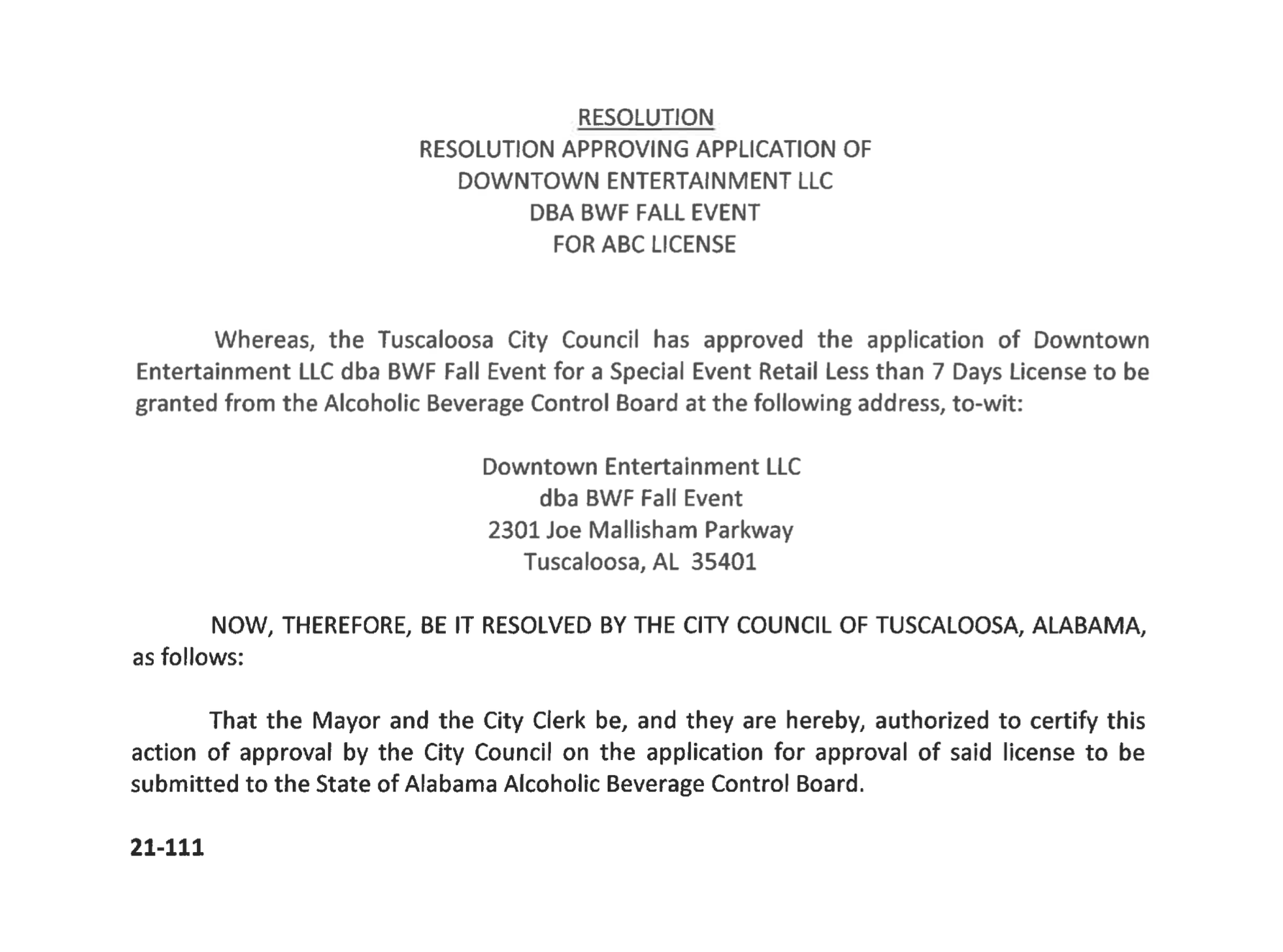
On November 12, 2021 a specially called meeting of Tuscaloosa’s City Council was held. An event–the BWF Fall Event –which, according to Council President Kip Tyner, would be a “UA Greek event that was inadvertently left off last Tuesdays agenda.”

When asked, Antonius Mills, a Senior Revenue Officer with the city’s Revenue and Financial Services Division, didn’t know what BWF stood for or who the Greek organization that was holding the event would be. The information had not been listed on the application by Downtown Entertainment LLC. All that the department representative knew, when an inquiry had been made, was that the event would be a field party on Joe Mallisham Parkway hosted by a “University of Alabama fraternity.” During the party they have would have “certain times allotted for each class” and participants would be bused to the event. (The event actually would likely have been a sorority party. Sororities must hold any large party off-campus since their houses don’t have adequate facilities.)

An earlier attempt in August, 2021, to hold a party (Kappa Alpha Theta sorority’s “Back to School Party”) on the farmland located off of Mallisham Parkway had failed. Downtown Entertainment LLC had asked that the application for the special events license be withdrawn before the Council vote. An even earlier attempt (the Kappa Delta Farm Party) in November, 2020, had failed as well.

On November 10, 2021, Tuscaloosa‘s City Clerk sent a media meeting notice announcing the November 12, 2021, Special Called City Council meeting, including a council resolution.

Resolution put before the Council:

The Specially Called meeting had lasted only three minutes. Only four Council members had been present. ( Kip Tyner, John Faile, Norman Crow, and Matthew Wilson) Council President Tyner had asked if there were any statements from the members. “Anything going on this weekend you want to talk about?” Several had then answered, “Roll Tide.”

None of the Council members had asked what BWF stood for or which organization was sponsoring the event. The city’s Antonius Mills, with the city’s Accounting and Finance department, had initially presented information on the application. Only Brandon Hanks of Downtown Entertainment LLC had been questioned. Council President Kip Tyner had asked him if participants in the event would bused to the event. Hanks had answered that transportation would be on nine buses. Then Tyner had asked Hanks if he had been aware of the kickoff time of the Alabama football game. “Just a side note, what time on Saturday do you expect it?…eleven am kickoff…terrible.” He then had wished Hanks “best of luck.” The resolution had then been unanimously passed.

The University of Alabama on November 4, 2021, had updated its Campus Health and Safety guidelines. Masks would no longer be required to be worn by fully vaccinated individuals. However masks would still be required for all individuals on campus buses.*

The third time had turned out to be the “charm” for the field party. The cows had come home. (Whether any cows actually were grazing in the field, along with the herd of students at the party was actually uncertain.)

Whether masks would be required on the buses for the BWF Fall Event was not stipulated. BWF likely didn’t stand for Better Wear Facemasks. (Other BWF abbreviations include Bi-Sexual White Female and Band-Wagon Fan.)

* The scientific basis for the University’s decision on facemasks might have been considered dubious. The Lancet published an article about how vaccinated people can still spread the virus:

Vaccination reduces the risk of delta variant infection and accelerates viral clearance. Nonetheless, fully vaccinated individuals with breakthrough infections have peak viral load similar to unvaccinated cases and can efficiently transmit infection in household settings, including to fully vaccinated contacts. Host–virus interactions early in infection may shape the entire viral trajectory.

And the Center for Disease Control and Prevention (CDC) had warned that in areas where there were low vaccination rates the wearing of masks was advisable:

Risk of SARS-CoV-2 infection, severe disease, and death is reduced for fully vaccinated people. However, since vaccines are not 100% effective at preventing infection, some people who are fully vaccinated will still get COVID-19 infection. Fully vaccinated people who do become infected can transmit it to others. Therefore, fully vaccinated people can further reduce their risk of becoming infected with SARS-CoV-2 and transmitting it to others by wearing a mask indoors in public in areas of substantial or high community transmission.

Standard

Honoring the fallen fan “Fluffopotamus”

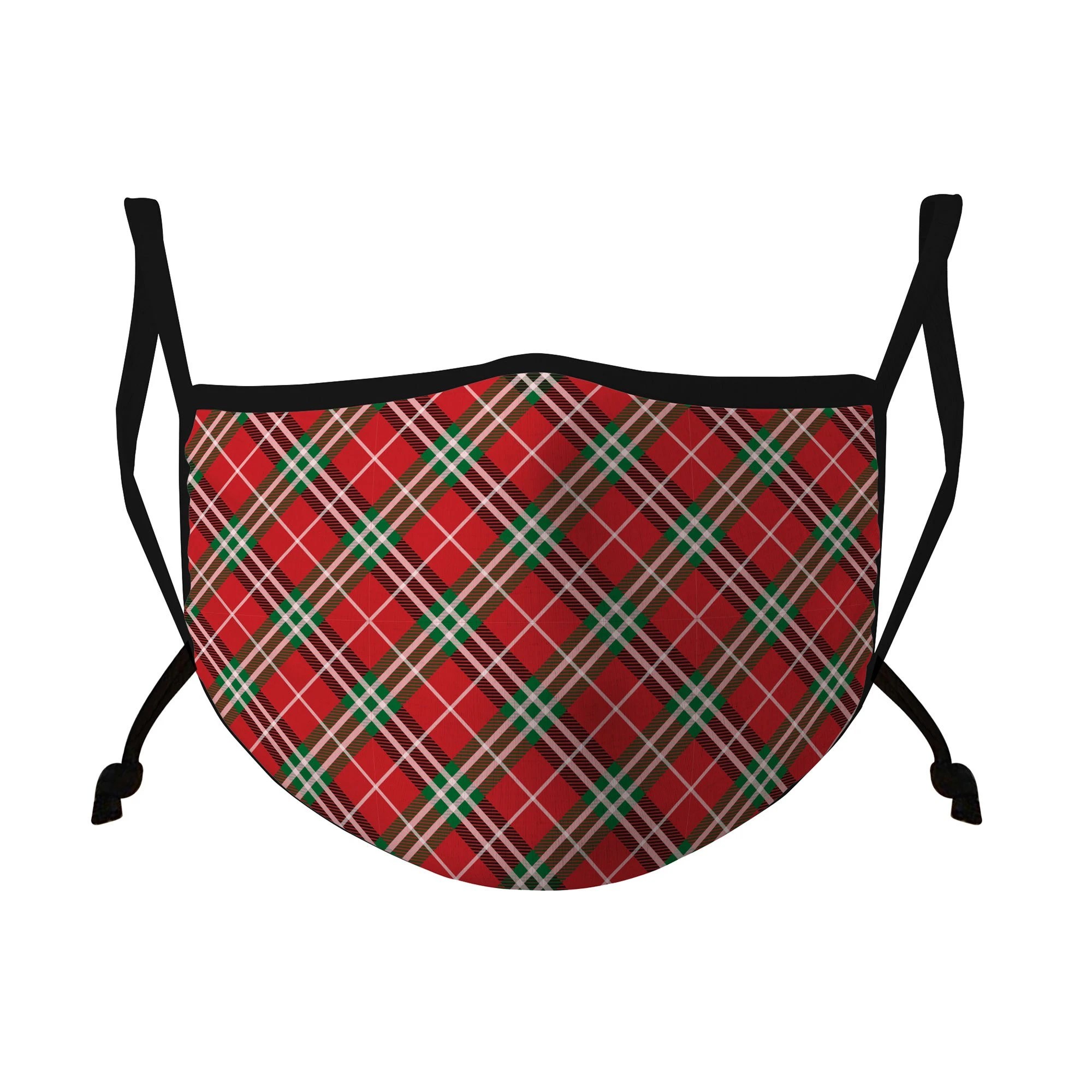
AmLife Facemask

AmLife Facemask

Could Alabama basketball superfan Luke “Fluffopotamus” Ratliff have been looking down from heaven during the Crimson Tide‘s opening basketball game?

In the Tuscaloosa News, Daniella Medina reported that: “Alabama basketball will honor Ratliff, who died April 2 of complications related to COVID-19, at its season opening double-header on Nov. 9 with a tribute and the presentation of a plaid jacket to the new Crimson Chaos president, the university said in a press release. The tradition will continue in Ratliff’s honor.”

Basketball fans might have better honored Ratliff by wearing plaid face masks.

The Crimson White‘s (CW) Ainsley Platt wrote that on November 5, 2021, that the University of Alabama would no longer require masks for vaccinated individuals on campus. Platt wrote:

While many students celebrated the announcement, some faculty members voiced concerns. Rebecca Britt, an associate professor in the College of Communication and Information Sciences, pointed out the difficulty of enforcing a mask mandate that only applies to those who are unvaccinated.

“I don’t approve of the mask mandate being lifted,” Britt said. “UA states that unvaccinated individuals will still be required to wear a mask indoors or during outdoor activities with close contact, but how will they be checking that? It’s not been clear from the University what the guidance is on that. Although I’m vaccinated, I’ll still be wearing a mask, because I’m not confident in the University’s policies, and I feel I need to do my small part in protecting community health.”

62% of the university’s students had, as of November 1, 2021, received at least one dose. (The percentage of fully vaccinated students at the University of Alabama had not been provided on the University of Alabama System‘s dashboard.) The state of Alabama‘s legislature had outlawed “vaccination passports” on May 17, 2021, as reported by Associated Press‘s Kim Chandler. Basketball fans had been allowed to forgo masks on a good faith basis.

Even while masks had been required to be worn indoors at the university, some students may not have complied. In Platt‘s CW article a student was quoted as having said about the new policy: “I’m excited about it. I think it was past due, and a lot of people in my classes stopped wearing them anyway, so even my teachers were not wearing them. It was tiring to have to remember to carry a mask around.”

The scientific basis for the University’s decision might have been considered dubious. The Lancet published an article about how vaccinated people can still spread the virus:

Vaccination reduces the risk of delta variant infection and accelerates viral clearance. Nonetheless, fully vaccinated individuals with breakthrough infections have peak viral load similar to unvaccinated cases and can efficiently transmit infection in household settings, including to fully vaccinated contacts. Host–virus interactions early in infection may shape the entire viral trajectory.

And the Center for Disease Control and Prevention (CDC) had warned that in areas where there were low vaccination rates the wearing of masks was advisable:

Risk of SARS-CoV-2 infection, severe disease, and death is reduced for fully vaccinated people. However, since vaccines are not 100% effective at preventing infection, some people who are fully vaccinated will still get COVID-19 infection. Fully vaccinated people who do become infected can transmit it to others. Therefore, fully vaccinated people can further reduce their risk of becoming infected with SARS-CoV-2 and transmitting it to others by wearing a mask indoors in public in areas of substantial or high community transmission.

As few as 45% of Alabama‘s residents had been fully vaccinated. According to CovidActNow, Alabama was a high risk state.

Many universities had been requiring measures to mitigate exposure at basketball games. Schools that had been requiring proof of vaccinations or mask wearing included Gonzaga, Duke, Xavier, UNLV, St. Bonaventure, Vanderbilt, Nevada and Wichita State.

The Nashville Post‘s Michael Gallagher wrote that at Vanderbilt “either proof of vaccination or a negative COVID-19 test (or negative antigen test) at least 72 hours before each game will be required for entry to any men’s or women’s basketball games for fans age 12 and older.”

Louisville fan Ed Rosen said in an article by the Louisville Courier Journal‘s Hayes Gardner that he would wear a mask in Yum Center:

“It’s too chancy,” he said of packed crowds, particularly indoors. “When you’re sitting in a crowd like that, with people right up on you, not knowing whether they’ve been vaccinated, not knowing whether they’re asymptomatic or anything else, and they’re screaming and yelling … I just don’t feel that that’s a chance that’s appropriate for me to take.”

Perhaps enshrining Ratliff’s former seat in Coleman Coliseum had been an appropriate way to honor Luke Ratliff? As far as mask wearing was concerned, few fans wore masks. But several fans sported plaid jackets. Having taken steps to prevent the spread of Covid would’ve been much more of a tribute to its loyal fan.

Standard

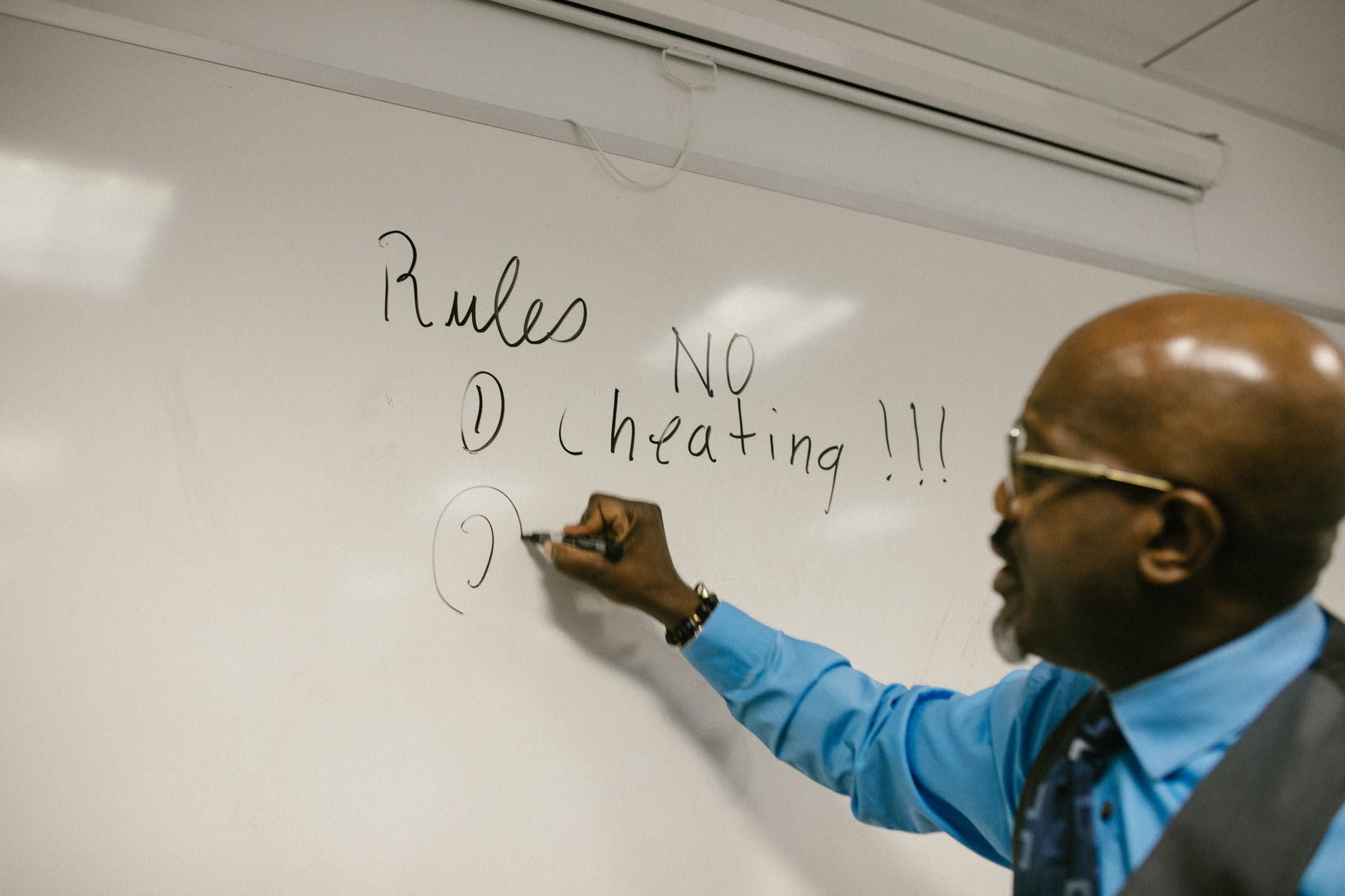
Cheating–A Capstone Tradition?

Photo by RODNAE Productions on Pexels.com

At the University of Alabama–when it comes to the game of campus politics–usually The Machine has the best hand. Many might call this cheating.

To many the choice of 2021’s Homecoming Queen seemed to be involved with such cheating.

Ironically the theme for the 2021 Homecoming was “Together We Rise,” “recognizing the collective spirit of the tide.” There did seem to be a collective disappointment over the selection of the Homecoming Queen.

As Bama Central‘s Katie Windham reported, the crowd at the Homecoming Pep Rally was disappointed when Montana Fouts was not crowned. Windham wrote:

The most anticipated moment of the night, the announcement of homecoming queen, was dragged out until over an hour into the pep rally. 

To the disappointment of a large portion of the crowd, Alabama softball pitcher Montana Fouts did not win homecoming queen. Instead the honor went to Tuscaloosa’s McLean Moore. The election was decided via votes from the student body on Tuesday. 

Any football fan who went to the Homecoming game on October, 23, 2021, would have noticed that during the halftime presentation of the Homecoming Court that the runner up Fouts was enthusiastically applauded by the crowd, whereas the actual Queen got obligatory clapping. One person said that, “Every time the stadium camera zoomed in on Montana, the crowd went crazy.”

After the campus newspaper, The Crimson White (CW), printed articles that challenged the propriety of the victory of a Machine endorsed candidate, Vice President for Student Life Myron Pope sent an email to the student body claiming that there is no basis for the election to be contested or overturned. Pope said that he contacted the campus newspaper’s editor although the CW’s Assistant News Isabel Hope editor wrote that he did not “discuss the contents of his email with The CW before sending it to the student body.”

Cheating? Naw! Not according to the Elections Board…

The Crimson White‘s Isabel Hope and Kayla Solino reported on the outcome of a Student Government Association Elections Board meeting that took place at the beginning of November.

The Elections Board ruled that “insufficient evidence was found to substantiate the allegations” that the Homecoming Queen election was fatally flawed.

In the CW article a “sit-in” protest that occurred on November 1st was also reported: “On Monday, the day before the Elections Board released its statement, more than 50 students attended a sit-in at the SGA Office on Monday to protest the actions of the Elections Board throughout homecoming week, including a timeline error that invalidated the election from the beginning.”

Opinions of the students who participated in the the protest were included in the CW article:

College of Arts and Sciences Senator John Dodd said the student protest was also a protest against the Machine, a more-than-century-old underground political organization on campus that controls elections.

“Even though it’s on a small scale, the student government is still a democracy,” Dodd said. “The Machine field of politics here at The University of Alabama will one day expand to state politics and Alabama. Eventually [these Machine candidates] are going to become your state representatives, they’re going to become your state senators, and they’re going to carry out this corruption that they learned in college and make it a part of their career forever.”

Sean Atchison, a sophomore majoring in international studies, said he contested the election to support increased transparency in the SGA. He said Pope’s email “crossed a line” because of the ongoing judicial appeal against the Elections Board.

“It was bull—-,” he said. “I believe that the SGA should be run by students, and there should have a certain level of autonomy from the administration. The administration can not decide when they don’t like something that they’re going to step in. Dr. Pope has put the administration’s weight behind a particular narrative, and nothing can be done without the shadow of that.”

The protest was an opportunity to point out transgressions by the SGA for Garrett Burnett, a junior double majoring in history and Spanish.

“Obviously everyone sees the homecoming election as the main issue,” Burnett said. “But I think it runs so much deeper than that. A lot of people don’t realize the blatant corruption of the SGA, the corruption of the Elections Board.”

Atchison said he feels clear on what students are fighting for.

“We’re going to continue to keep having these problems as long as we are not talking about the Machine,” he said. “This is not just about the Elections Manual. This is not just about that email. This is about ending the Machine once and for all.”

Just as in the case of voting in a T-Town municipal school board election, where the turnout had usually been low, an orchestrated bloc vote by The Machine for Homecoming would win the day. In the case of the Homecoming Queen election the winning candidate didn’t even get 50 percent of the total vote. Whether, if a runoff election had been scheduled, the more popular Fouts would have won will never be known. One outcome of this episode in the history of The Machine is that a little more light was shown on the notorious, “secretive” university organization

Standard

The Machine & The Queen

Photo by Pixabay on Pexels.com

Most residents of T-Town were familiar with The Machine at the University of Alabama. Its alleged involvement in electing the University of Alabama‘s 2021 Homecoming Queen may have have been considered by some as just another story about The Machine.

The University of Alabama‘s student newspaper The Crimson White in 2020 featured a story about The Machine by Jessa Reid Bolling. Bolling wrote:

Stories of alleged Machine actions have grown over decades, including burglary, cross-burning, vandalism and social ostracism, to name a few. Two decades ago, the Student Government Association was temporarily disbanded after a non-Machine presidential candidate claimed she was assaulted. A former Tuscaloosa school board member sued over claims the group improperly swayed a city election by providing students with booze and concert tickets in 2013. While actions taken by the Machine have become less recognizable and less violent in recent years, the organization’s past has become clearer with time.

Peter Jacobs in The Business Insider gave accounts of The Machine having tapped the phone of a student candidate, permanently closed a local business, and assaulted a rival candidate, among many other nefarious actions.

The Machine‘s involvement in a local school board election in 2013, involving limo rides to the polls and promises of free booze in exchange for voting for a Machine endorsed candidate, achieved national notoriety.

A 2013 entry in the Franklin Stove Blog gave details about the municipal election.

The Greeks now own the dubious honor of controlling Tuscaloosa’s District Four. In 1997 an undergraduate student who was President of the University’s Inter-fraternity Council Lee Garrison was able to secure a seat on the Tuscaloosa  City Council with the help of The Machine Vote at the University.

One student supporter of the school board candidate endorsed by The Machine posted on social media that she thought he was hot and she’d be willing to give him a “handy” any day.

WVTM/13‘s Linda White in 2015, wrote about the lawsuit filed by school board incumbent Kelly Horwitz, who had run against the candidate endorsed by The Machine. Horwitz had filed a lawsuit alleging that illegal votes, which violated the 30-day residency requirement for municipal elections, had been cast for her opponent. The Alabama State Supreme Court then had indeed ruled that illegal votes had been cast for her opponent. However, in 2016, Tuscaloosa County Circuit Court Judge Jim Robert dismissed her case.

A Tuscaloosa City Council meeting concerning redistricting had been held in October, 2021. As reported by the Tuscaloosa NewsJason Morton, concerns over a future student vote were expressed by the District Four Council member Lee Busby. Morton wrote that “the main sticking point was in District 4, which includes the bulk of students attending the University of Alabama. Mobilization efforts in past elections have helped sway the outcomes based on the votes of temporary or transient residents, many of whom don’t live here long enough to face the consequences of their electoral actions.”

Articles in The Crimson White, after the 2021 Homecoming Queen vote, had been highly critical of its outcome. Keely Brewer and Isabel Hope wrote that the vote was, in fact, invalid.

AL.com‘s Kyle Whitmire mentioned the Crimson White‘s coverage of the vote in an article “What UA’s homecoming queen debacle means for Alabama.”

Whitmire asked, “Who cares if the Machine or anybody else there is up to shenanigans again?” He pointed out that The Machine had been involved in Alabama politics for decades. He wrote that “somebody decided the rules didn’t matter this time.”

He concluded his article in this way: “And there’s better than fair chance that, in a decade or two, one of those somebodies will be your lawmaker, your senator, or your governor.

Tuscaloosa Thread‘s Lauren Stinson wrote: “While Fouts was one of the most popular candidates in the race, her loss doesn’t come as much of a surprise. Many controversies surrounded this year’s homecoming queen race as McLean Moore was allegedly backed by Theta Nu Epsilon, otherwise known as The Machine.” Added to disappointment felt by many fans in T-Town over the University of Alabama super-star softball pitcher Montana Fouts having lost was the conviction that it had likely been only due to the chicanery of The Machine.

Standard