I'm heating things up a little in T-Town. They call me 'The Seeker' George Orwell: "There was truth and there was untruth, and if you clung to the truth even against the whole world, you were not mad.”
In 2014, The Franklin Stove Blog (FSB) was linked to at the end of a touching and disturbing letter from an Alabama student’s mother to the University of Alabama President Judy Bonner.
Patricia Ann Smith was concerned about the negative experiences of her daughter Katie at the Capstone and with the Machine. Bonner was serving as the first women President of the University of Alabama. (Many of the letter’s readers from T-Town only could find the letter on The Franklin Stove Blog‘s post, because it was never published in the Tuscaloosa News.)
Bonner had her hands full at the Capstone. In 2014, after a a member of the Chi Omega University at the University had made a racially offensive Snap Shot post, she sent an email addressing the situation. The email (as was Smith‘s letter) was published in full on the FSB. In her email Bonner said, “We are all extremely disappointed when any student uses language that is disrespectful or offensive to any segment of the UA community.”
The FSB reported about the sorority’s history:
A 2013 story in The Crimson White reported that a member of Chi Omega, who asked to remain anonymous, said “‘I know [the recruit] got perfect scores from the people in chapter the first day, and she got cut after the first day and I know it had to do with our advisor – is the one that dropped her,’ the Chi Omega member said. ‘Her name is Emily Jamison.’”
The Chi Omegas had just dropped their one black recruit in the most recent rush.
Bonner stepped down from her position at the University in 2014. Reporting by the FSB in the post “Goodbye Judy” included:
Bonner attended the ribbon cutting for the Omicron Chapter of Pi Kappa Phi Fraternity. The building was said to be the “greatest fraternity house on campus.” Pi Kappa Phi’s credo was: ‘A house, a grip, a badge, a song, an emblem. These do not make the fraternity. It is the unseen things: friendship, brotherhood, character, honor, courage, ideals. These make the fraternity and the man.’
But there was always a fly in the ointment. ‘Brotherhood,’ when it came to having a black brother or sister, was relative. Bonner took modest efforts to integrate the University’s Greek system. Many who dealt with the University on issues related to student ethics felt that Bonner was constrained by the cozy relationship that the University’s administration had with the Greek system. Nearly thirty percent of the student body are Greeks and many come from wealthy and powerful families.
After Bonner‘s departure from the University, the Machine still dominated campus politics and racial improprieties continued, as had been reported in the FSB. There were still racist posts on social media. And students sometimes faced modest consequences.
The problem with institutional racism at the University seemed intractable. It was indisputably linked to the importance of Greek life at the Capstone.
Bonner was recently given accolades, as reported in Tuscaloosa News reporter Jasmine Hollie‘s June 10, 2022, story “University of Alabama renames Child Development Center in honor of first female president.” Hollie wrote:
In 2016, the university first awarded the Judy Bonner Presidential Medallion, which recognizes a member of the UA community who has gone above and beyond normal expectations. And Eighth Street, between Colonial Drive and Sixth Avenue, is now known as Judy Bonner Drive.
In all likelihood Bonner has fond memories of her time at the Capstone. The University has certainly given her the recognition that she deserves. Smith‘s letter to her in 2014 was doubtlessly just a blip on the radar screen to her.
The Franklin Stove Blog was initiated in July, 2013, when its domain name “ttowntruthseeker.com was acquired. The first post was on August 8, 2013.
The Franklin Stove Blog first reported about the insanity of the 2013 municipal elections in T-Town, when University of Alabama students, who were bribed by the promise of free booze, rode to the polls in limousines to vote for a Machine supported candidate. Subsequent posts concerned under-aged drinking, the Covid pandemic, violence in T-Town and other issues. A blog about a sorority “Farm Party” during the Covid pandemic received the most attention. It was linked to in stories across the globe after it was referred to in a post in the Daily Beast by Olivia Messer “Alabama Sorority Gets Official Blessing for 600-Person Farm Party Just in Time for Holidays.”.
In one more year the Franklin Stove Blog will celebrate its tenth anniversary. It would seem appropriate that anniversary would be the right time to end the blog.
If, for any reason, archiving a Franklin Stove Blog post would be of interest, then a pdf should be created.
Hopefully in its last year, the Franklin Stove Blog will continue its tradition of seeking the “truth”.
The fictional character Robert Langdon in Dan Brown‘s, The Da Vinci Code had this line:
“History is always written by the winners. When two cultures clash, the loser is obliterated, and the winner writes the history books–books which glorify their own cause and disparage the conquered foe. As Napoleon once said, ‘What is history, but a fable agreed upon?”
The quote “The truth is out there” comes from The X-Files television series about the government’s covering up of paranormal phenomena. Sometimes the truth seems stranger than fiction.
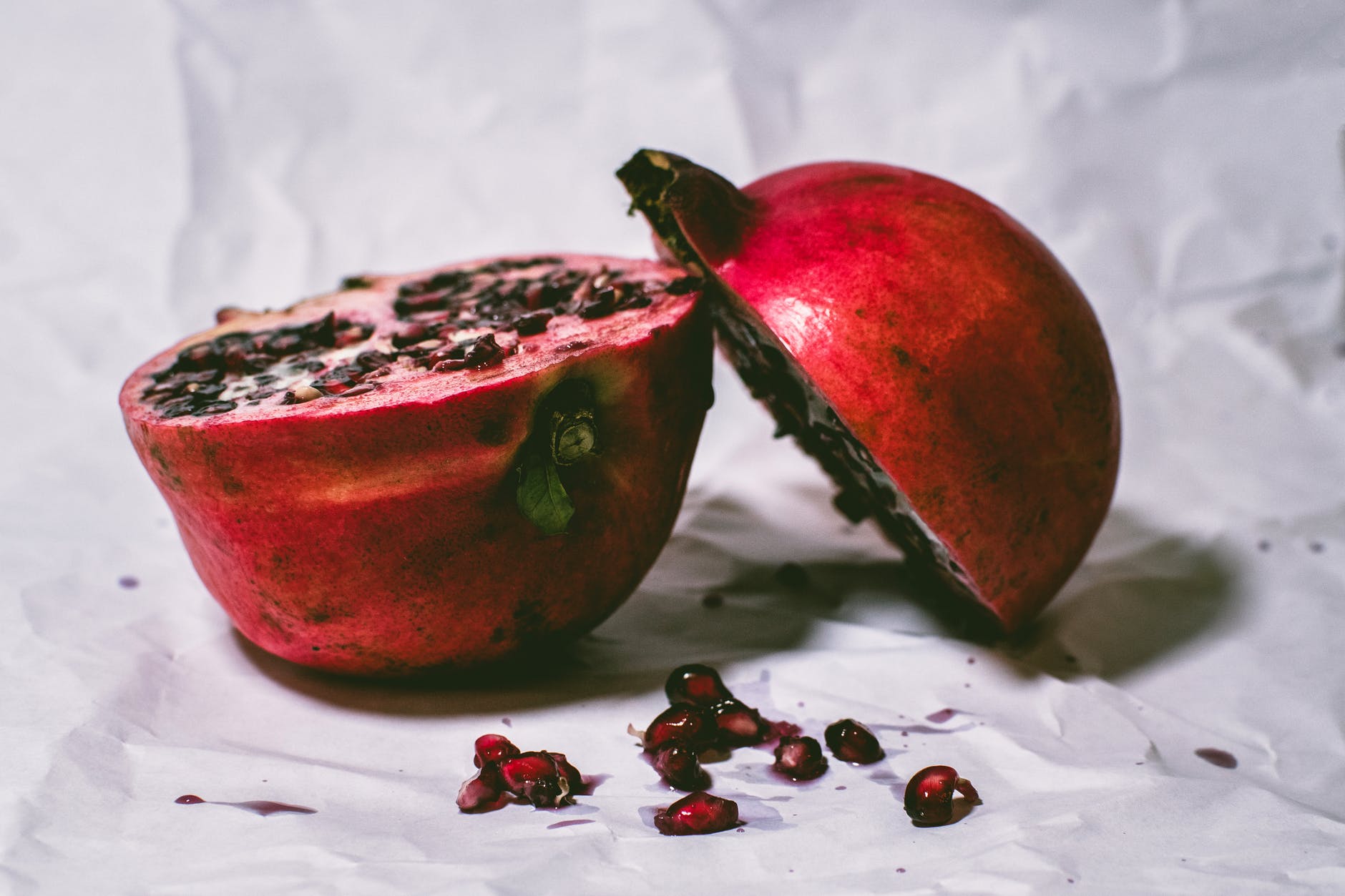
In Greek mythology, the pomegranate was considered a symbol of fertility and rebirth. Mentioned in Homer’s “Odyssey,” the fruit has a long-standing connection with good health. In Greek culture today, pomegranates are commonly smashed on New Year’s Day — the number of seeds that scatter signify how lucky the coming year will be.
According to the Greek Reporter: “The most renowned myth associated with the pomegranate fruit is the one of the abduction of Persephone by Hades. According to the myth, Hades offered the fruit to Persephone in order to seal their eternal bond.”
“Greeks” at the University of Alabama may, unlike their namesakes in Greece, not rely on a fruit for good luck.
Why should they?
Greeks comprise roughly 35% of its student body. The University’s Division of Student Life proclaims that, “The University of Alabama has held the coveted honor of being the largest fraternity and sorority community in the nation with regard to overall fraternity and sorority membership.”
In 2021, Angela Velasquez in Sourcing Journalwrote about fashion trends during Rush Week:
It’s peak summertime during a pandemic, which means like all elder millennials who don’t have the energy to socialize or simply forgot how, I spent my weekend happily sitting next to the A/C, ordering mozzarella sticks and losing all sense of time in the latest TikTok craze, #bamarush.
The viral hashtag, which has 221.4 million views and counting as of Sunday night, unlocks a portal into the world of Southern sorority recruitment and panhellenic society at the University of Alabama, where from Aug. 7-14, 2,000-plus women convened to take part of the rush process.
Velasquez pointed out the Greek fashionistas were a boon to T-Town‘s economy. Tuscaloosa‘s Mayor Walt Maddox in 2020 said, “Student spending itself in Tuscaloosa is a $366 million investment.”
The city of Tuscaloosa may to some extent depend on revenues from alcohol sales to students to stay afloat.
The Greek system at the University of Alabama has been historically racist. As recently as last year two sorority members were making headlines over their racist texts.
Time magazines’ Cady Lang had a different perspective on Rush Week than the one in Velasquez‘s reporting. Langwrote:
While what goes into the curation of every TikTok user’s For You page remains a mystery, one thing has become clear—content from University of Alabama students vying for a spot at the school’s sororities has dominated the app over the last week. This trend, dubbed “RushTok” by TikTok netizens, started when sorority hopefuls began making videos of themselves and what they were wearing for “Bama Rush,” University of Alabama’s Greek recruitment week.
The obsession with RushTok, however, also serves as a cogent reminder of the longtime critiques of the racism, elitism and sexism embedded in many Greek life organizations. In universities across the U.S., sororities and fraternities have faced reckonings in the wake of hazing violence, sexual assault and even death.
Lang included a link to a Vox article by Maryam Gamar that criticized college Greek life as a whole. Gamar wrote: “The cliquishness, classism, and racial insensitivities of Greek life have never exactly been hidden.”
Al.com’s Abbey Crain in 2018 wrote that, while the sororities at the University had been “formally desegregated” for years, there had been little progress in sorority integration. Crain reported:
Each summer, a week before classes begin, APA hosts sorority recruitment in a process commonly referred to as “Rush Week.” Thousands of freshmen girls attend with the hopes of matching with their sorority of choice. And until recently, African-American women were denied “bids” to join traditionally white sororities. The issue came to a head in 2013 when Kennedi Cobb, granddaughter of John England, a prominent judge and a member of the University Board of Trustees, was denied a bid despite her decorated resume. Melanie Gotz, a student at the time, brought attention to the discrimination and spoke openly of her sorority’s involvement in denying Cobb.
Will Rush Week at the Capstone this summer bring any changes to the University’s Greek system? There may not be enough pomegranates in the world to change things in T-Town.
Researchers from the University of Illinois Chicago (UIC) have been studying the effects of early life binge drinking. They’ve concluded that gene editing may be a potential treatment for alcohol abuse by teens.
“Early binge drinking can have long-lasting and significant effects on the brain, and the results of this study offer evidence that gene editing is a potential antidote to these effects, offering a kind of factory reset for the brain, if you will,” said study senior author Subhash Pandey, the Joseph A. Flaherty Endowed Professor of Psychiatry and director of the Center for Alcohol Research in Epigenetics at UIC.
Alcohol consumption, including binge drinking, has increased since the beginning of the pandemic, according to Boston University. In 2020, alcohol consumption was up 14% from 2019. Lockdowns also significantly increased alcohol sales.
Boston University‘s Alumni magazine Bostonia published an article about youth alcohol consumption:
For many public health researchers striving to prevent excessive alcohol use in adults, step one is stopping them from drinking as kids. Alcohol is the most widely used substance among youth—more than tobacco and marijuana. About 25 percent of 14-to-15-year-olds have had at least one drink, while 11 percent of teenagers admit to binge drinking, according to the Substance Abuse and Mental Health Services Administration’s National Survey on Drug Use and Health. Youth alcohol use is also a solid predictor of substance use disorders in later life.
Ohio University has a mandatory program for new students dealing with potential alcohol use by its under-aged students:
To aid students in their decision-making, the University requires all new students at Ohio University to successfully complete a 2 ½ hour online alcohol education course called “AlcoholEdu for College.” This nationally-distributed program is interactive and employs cutting edge technology, and is intended to challenge students’ expectations around alcohol while enabling them to make healthier and safer decisions. It does not assume that a student drinks.
The University of Alabama‘s online program “Under The Influence” is intended to encourage “students to identify ways to make more responsible choices to avoid the negative consequences of alcohol.”
The National Institute on Alcohol Abuse and Alcoholism‘s (NCAAA) published a fact sheet on college drinking. The NCAAA states:
Drinking at college has become a ritual that students often see as an integral part of their higher education experience. Some students come to college with established drinking habits, and the college environment can lead to a problem.
Drinking by students at the University of Alabama was the subject of a post “The Greek God Pan at the U of A” by the Franklin Stove Blog on April 21, 2022. The centrality of alcohol consumption in the University’s social life is not atypical:
Drinking during the pandemic may have led to more deaths than Covid-19. At colleges throughout the nation, in spite of any of the pandemic’s restrictions on “normal” college life, drinking remained a fixture of college living.
A “factory reset” for the brain with gene editing, as proposed in the UIC study, may someday be a reality. Until then, programs that encourage better student choices on alcohol consumption may continue to be an ineffective, but necessary, last ditch stand.
The Greek God Pan ruled over nature and pasturelands, according to Greek Gods and Goddesses.
The word “pandemic” was derived from Greek pandēmos (from pan ‘all’ + dēmos ‘people’).
One early attempt to avoid compliance with what were then the University of Alabama‘s Covid-19 pandemic policies failed, as reported in the Franklin Stove Blog on November 11, 2020. Subsequent attempts to party on pastureland were successful.
Leana S. Wen in the Washington Post opined that drinking increased during the pandemic. In fact, there were more alcohol related deaths of younger people than deaths due to Covid-19. Wen wrote:
A new study from the National Institute on Alcohol Abuse and Alcoholism (NIAAA) finds that alcohol-related deaths in 2020 were so high that, for 16- to 64-year-olds, they exceeded the number of deaths from covid-19. Previously, the average annual increase was a little more than 2 percent; between 2019 and 2020, it skyrocketed to more than 25 percent. The largest rise in mortality occurred for people 35 to 44 years old, though rates of death associated with alcohol increased across all age groups.
The University of Alabama promoted voluntary Covid-19 vaccinations on its website. On the page “Protect Our Herd,” the university stated: “Everyone in our campus community is strongly encouraged to be vaccinated. Don’t wait.”
Just how many students actually fully availed themselves of free vaccinations was never clear. According to the university’s Covid Dashboard, the total number of vaccine doses administered by each institution’s healthcare providers was 23,940. The student population, according to the university’s website, was 38,320 in 2021. The Student Health Center and Pharmacy offered the “COVID-19 Pfizer vaccine series and booster shot for UA students.” The Center for Disease Control and Prevention (CDC) stated that a person is fully vaccinated, only after two doses of the Pfizer vaccine. Unless students received vaccinations from off-campus providers, it was likely that many students were never fully vaccinated. And booster shots had been recommended by the CDC as well.
Many in the Greek community at the university were fond of partying at a local pastoral site next to the Joe Mallisham Parkway. Considering the apparent lack of student vaccinations, it may have been miraculous that the herds of partying students did not become super-spreader events.
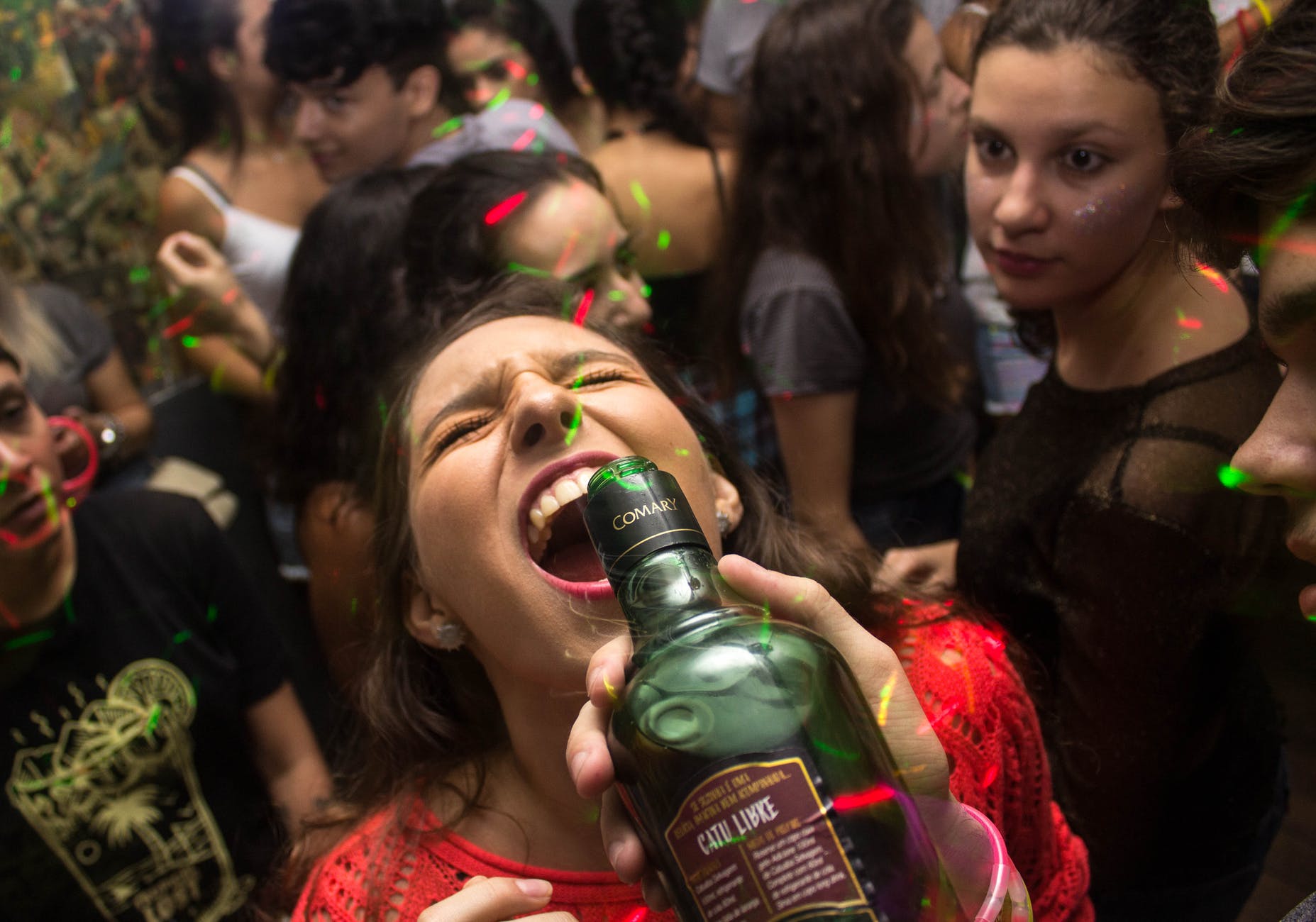
Drinking during the pandemic may have led to more deaths than Covid-19. At colleges throughout the nation, in spite of any of the pandemic’s restrictions on “normal” college life, drinking remained a fixture of college living. At the University of Alabama, alcohol was often consumed by a herd of unmasked students who were down on the farm.
On a recent balmy Saturday in T-Town hordes of young University of Alabama co-eds were to be seen marching to the multiple on-campus parties where booze was made available to one and all. The idea that under-aged students would not be able to consume alcohol was a preposterous fiction.
The University’s Division of Student Life proudly proclaimed: “With over 10,000 students, the UA Greek community comprises 35 percent of the undergraduate student body and is home to 68 social Greek-letter organizations. Since Fall 2011, The University of Alabama has held the coveted honor of being the largest fraternity and sorority community in the nation with regard to overall fraternity and sorority membership.”
A March 2022 post by MeTVfm celebrated the classification on the Barstool Sports list of the University as the Nation’s #1 Party School:
I am so tired of seeing all of these lists come out, with Alabama ranked dead last.
If it’s not our state it is one of our cities. Worst for this or that.
I am sick of it.
Finally we have placed FIRST on a list.
What list?
The TOP PARTY SCHOOLS IN THE U.S.A.
The ALABAMA CRIMSON TIDE IS #1!
It’s improbable that only the students who are of legal age to drink have made the University of Alabama a top party school. After all most students aren’t 21 years of age.
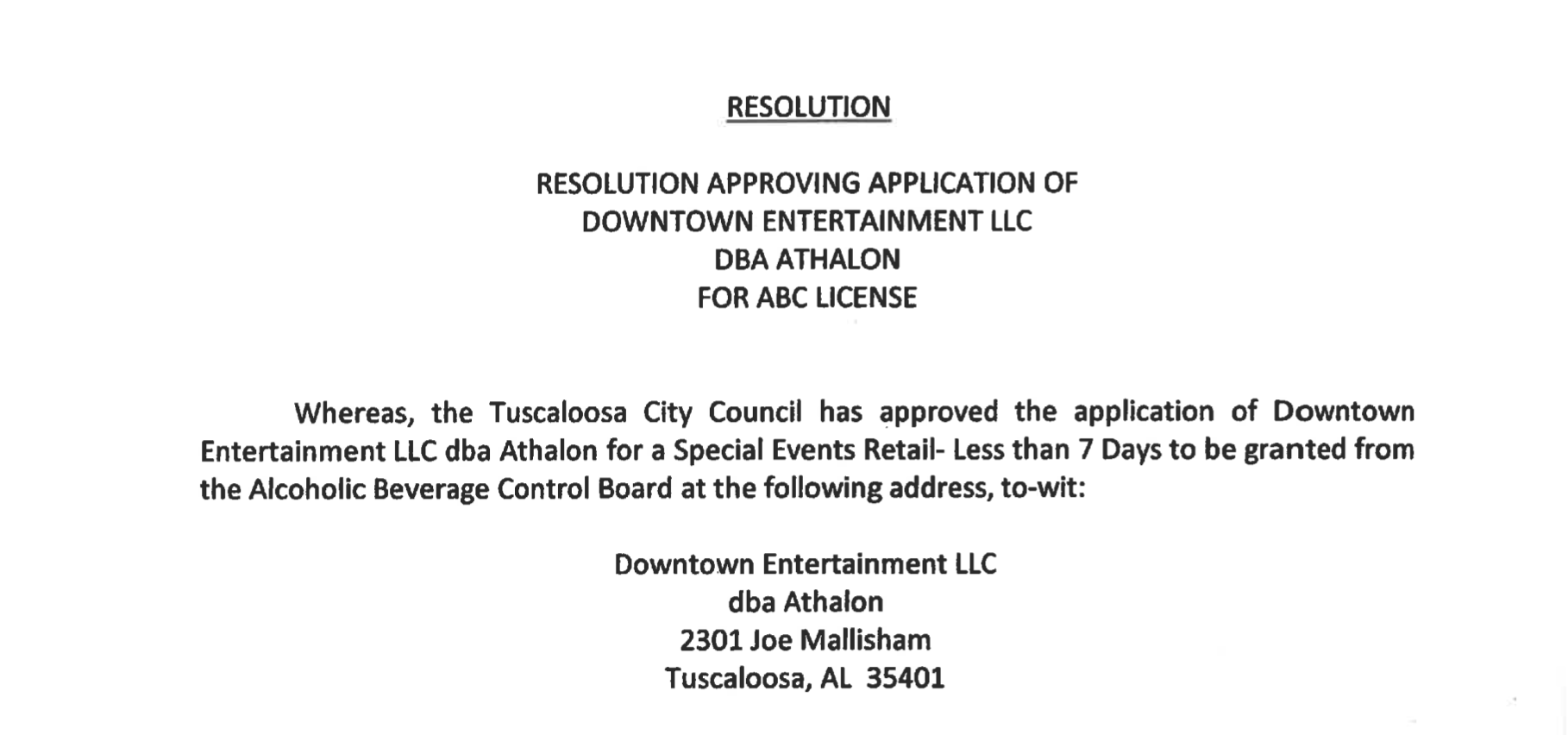
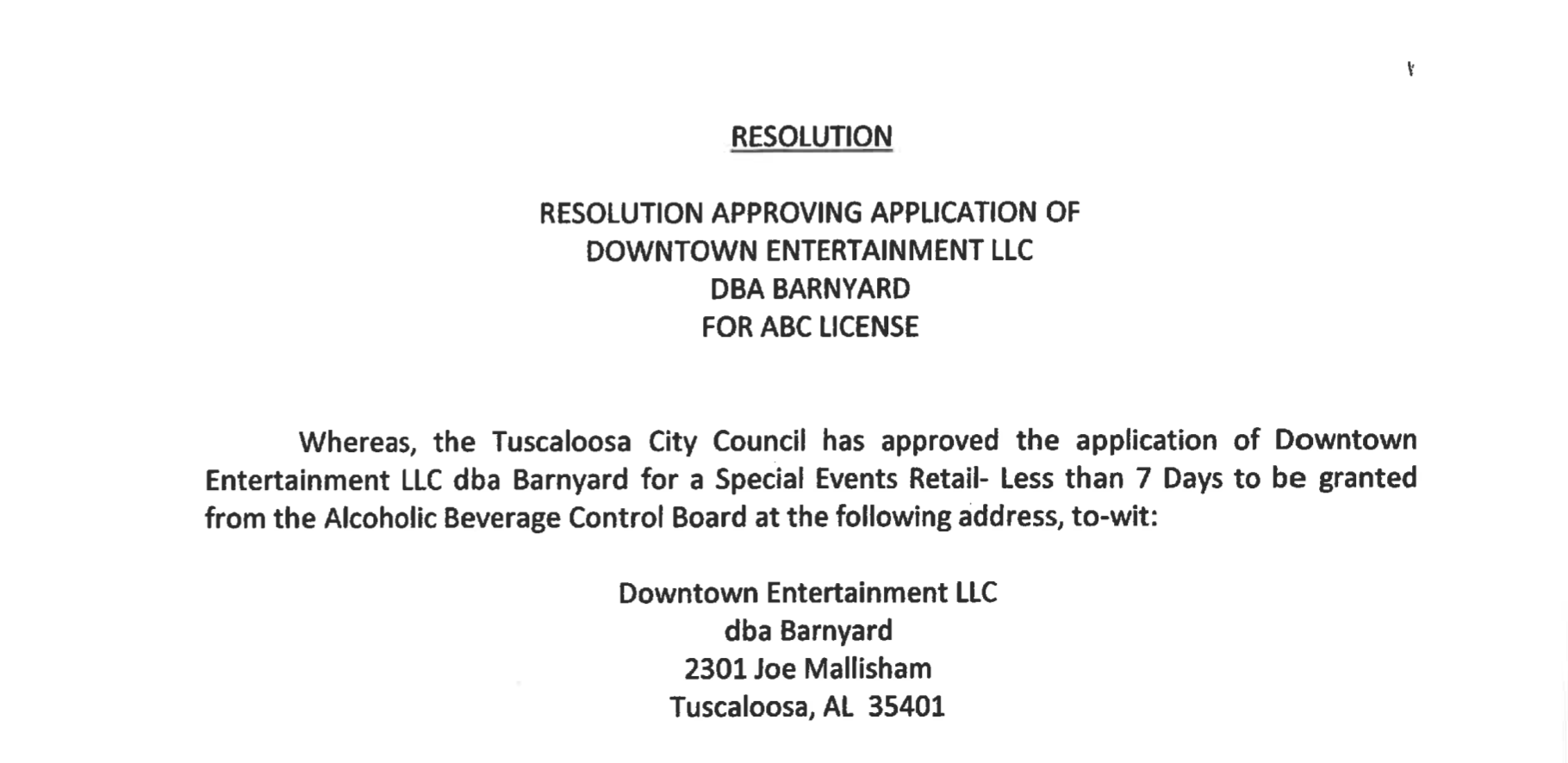
Five sorority events have been scheduled for April on farmland so that sororities could reciprocate the hospitality of their affiliated fraternities. (Sororities don’t host bacchanalian events on campus.) The liquor license for the fifth party on the farm (the “Parkslands Event”) was approved by the Tuscaloosa City Council on March, 29, 2022. (Several “special events retail licenses” for on-campus fraternity events were also granted by the Council, ranging from the “Mint Julep Date Party” to the “Fiji Island” party.)
Orchestrated voting for booze by the University’s Machine had made headlines throughout the world in 2013.
Underaged drinking at campus events, although strictly prohibited by the University of Alabama‘s policy, doubtlessly goes on, just as much as does the political interference of The Machine in politics.
Alex Jobin, the University’s student paper The Crimson White, wrote (March 27, 2022) about the undue influence of TheMachine on campus politics:
Out of the 19 sororities on campus, The Crimson White “received confirmation of at least six sororities endorsing candidates, three sororities incentivizing their members with points, one sorority requiring members to vote, and all sororities encouraging members to submit voter confirmation.”
By use of intimidation and incentives, these Greek organizations are directly harming the credibility of campus elections. Members of Greek life are coerced into conforming with the political preferences of their organizations’ leaders, creating a disingenuous voter base.
This frankly cultish character of many Greek organizations goes beyond harmless tradition. It is directly related to the corruption of the Machine — the University’s not-so-secret secret society, which controls campus elections through ties to the SGA and Greek life.
The impact on local politics of the University’s Machine has led to the rescheduling of Tuscaloosa municipal elections. There would have been no need for the city’s government to take such measures if the University administration would outlaw the Machine. It is likely that the Machine‘s deep ties with powerful Alabama alumni and its Board of Trustees is the reason that the University has not reined in the Machine. Nor has the University taken any major measures to end the racist nature of its Greek system.
Students who are bused out to the farm parties, will likely be white. Due to a de facto segregation of the University’s Greek system, there are few sororities with black members. Some event staff members, bus drivers and performers might not have lily white complexions, of course. Actually it’s unlikely that many black students would relish heading out to a farm for a drink.
At the Tuscaloosa City Council Pre-Council meeting on March 22, 2022, the Accounting & Finance Department’s Chief Compliance and Enforcement Officer Vincent Brown briefed the Council members about the Alabama Beverage Control applications of Downtown Entertainment LLC for special events licenses. Four of the events were to take place on farmland. Brown said however that “most of the events were just on campus, at the fraternity houses.”
Council member Lee Busby asked Council member Matthew Wilson if he had ever been invited to one of the events. Members then laughed when Council President Kip Tyner asked, “Why don’t you just show up at one of them?”
Matthew Wilson said that several of his constituents had expressed concern over potential security problems at the events which were to be held on 2301 Joe Mallisham Parkway. He had asked whether the city or county would have jurisdiction for the events.
Mills said that most of the events would be “shut down by ten o’clock.” It was suggested that anyone with concerns should “ask Brandon.”
One of the Council members at the meeting said that if the “music was loud enough to disturb the neighbors then the cows probably love it.”
Downtown Entertainment LLC.’s registered agent is Brandon Hanks. One of his events in 2020 had been cancelled. The application for another scheduled event for August, 2021, had been withdrawn. in November, 2021, a BWF Fall Event finally took place. What “BWF” stood for had never been a concern of the Council members who approved the license during a Specially Called meeting. Nor had been the names of the organizations that Downtown Entertainment LLC. had represented for the events to be held in April, 2022.
The five pastoral events brought before the Council on March, 22, 2022, were similar to the BWF Fall Event. They were DBA (doing business as): April Fools, Athalon, Barnyard and Farm Party. There was no identification of the Greek organizations who were holding the parties on the applications. The last time that a sorority that had held a party on on the farm was identified by Downtown Entertainment, LLC. on an application was in 2021.
Even if the cows might actually love the loud music, hopefully residents of the area will not be disturbed. They would likely not know who to call to make a complaint.
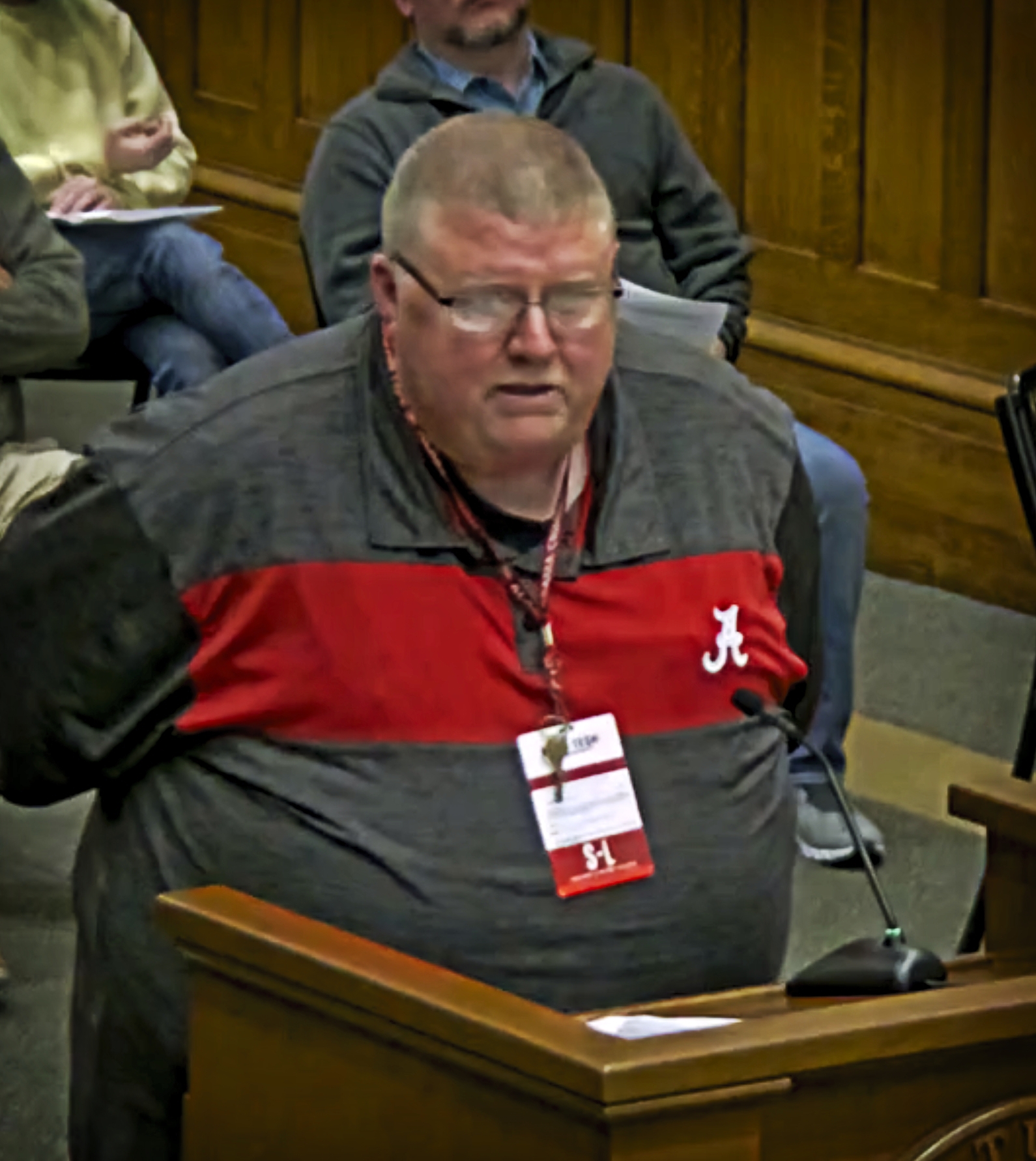
At the public hearing on approving a liquor license for Coleman Coliseum on February 8, 2022, a Tuscaloosa City Council member asked if there had been problems at other schools that had served alcohol at sports events. Herbert Tesh, the representative from Levy Premium Foodservice, had replied that he knew of no problems where his organization had been involved.
As the Tuscaloosa News‘ Jason Morton had reported, Alabama Athletic Director Greg Bryne had said, “We’ve been able to watch the other schools and the reporting we have gotten back from other schools is that alcohol incidents at their games actually go down once they sell because it’s a much more controlled environment.”
Bryne may not have been aware of the story that had been written by Adam Sparks in the Knoxville News Sentinel that had been published in February, 2022. The article “Tennessee sold $2.67M in alcohol at football games with Lane Kiffin’s return providing biggest spike” had reported: “Alcohol sales and fan misbehavior at Tennessee football home games were at their highest on the night trash was tossed on the field in a Vols’ loss to Ole Miss, university records obtained by Knox News show. Water bottles, beer cans and other debris were thrown on the field in an incident that paused the game for 18 minutes.”
Sparks had written:
There were 18 arrests and 51 ejections in UT’s game against Ole Miss. UT sold 47,890 alcoholic beverages for $547,726 in revenue at the Ole Miss game. Those numbers were the highest for a single game since UT started selling beer and wine at football games.
Media outlets, as far and wide as the NY Post and Sports Illustrated, had covered the story of Kiffen having been nearly being hit by a thrown golf ball. An Associated Press story in the NY Post had reported:
“I don’t know if I’m more excited that we found a way to win or that I didn’t get hit with the golf balls that they were throwing at me,” former Vols coach Kiffin told SEC Network, holding up a yellow golf ball.
“I still have my souvenir golf ball,” Kiffin said. “I also got hit with bottles with some brown stuff in them. I don’t think those fans would waste moonshine. You’ve got one of the most passionate fan bases in America. A call didn’t go their way.”
Sparks had reported in 2021, that: “Tennessee has been fined $250,000, which will be deducted from the university’s share of SEC revenue distribution, for the incident at the end of the Ole Miss game, when fans tossed trash on the field to protest the officials’ call.” The over $547,00 revenue in alcohol sales that had been generated at the game could have made the penalty more bearable.
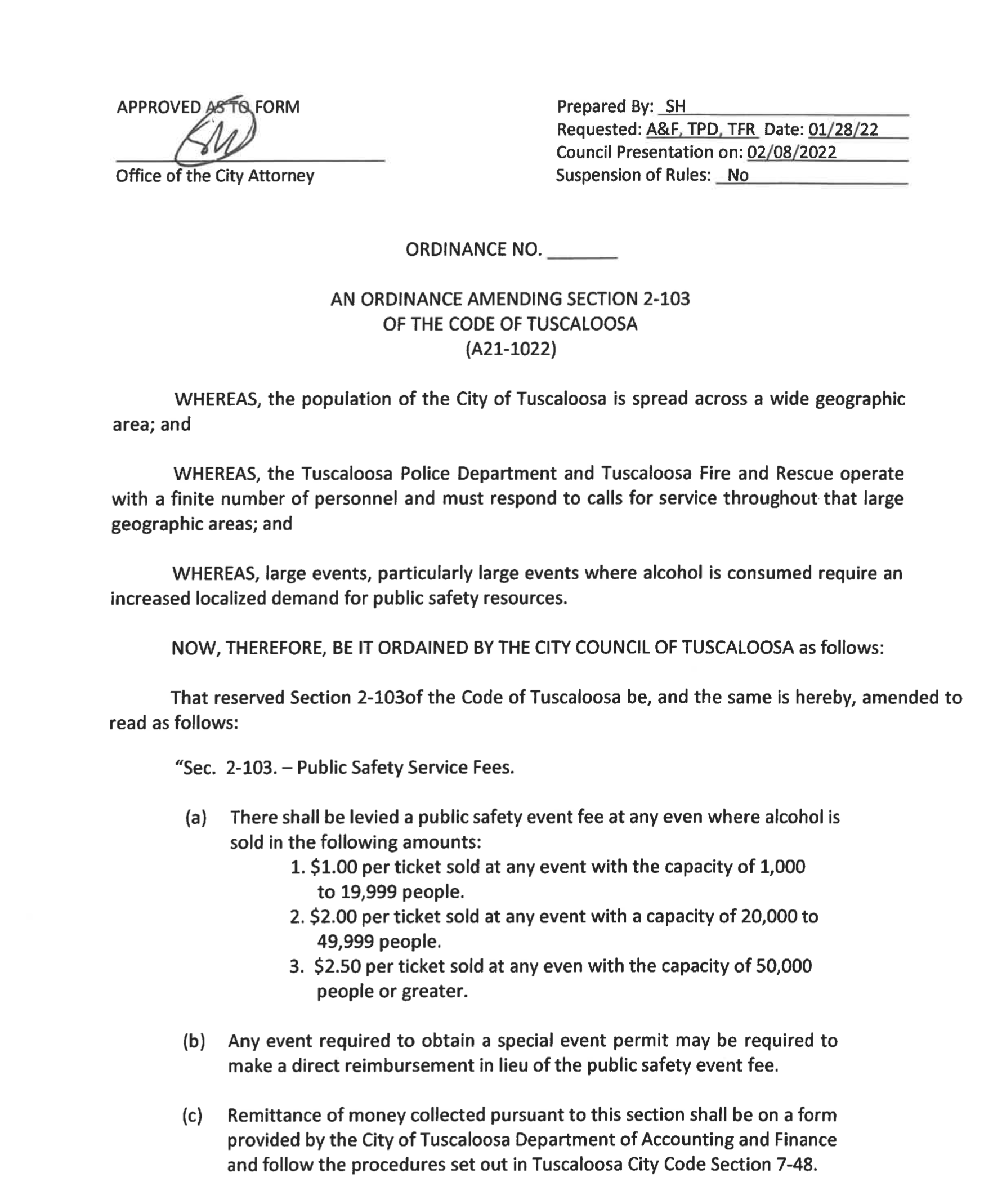
On February 8, 2022, the Tuscaloosa City Council had voted to pass an ordinance amending Section 2-103 of the city’s code. The ordinance was based on the need for funding “increased localized demand for public safety resources.” It established public safety fees, that would be assessed on a per ticket sold basis. Before it had passed, Council President Kip Tyner had amended the ordinance. Instead of there being a $2.50 fee for each ticket sold for an event that had 50,000 or more attendees, where alcohol could be sold, the fee would be $3.00.
The initial discussions on such a public safety fee had occurred during the city council’s budget meetings. On August 27, 2021, Mayor Walter Maddox had proposed the Fiscal Year 2022 operating budgets. The public safety fee had been proposed as a way to increase in pay for Tuscaloosa Police and Tuscaloosa Fire Rescue. The fee would be one dollar added to any ticketed event where alcohol was sold.
The Tuscaloosa News‘ Jason Morton had reported on September 25, 2021 on the adoption of the city’s fiscal 2022 operating budget. He had included: “A $1-per-ticket fee on ticketed events of more than 1,000 people where alcohol is sold, such as a concert at the Tuscaloosa Amphitheater, will now be imposed.”
The ordinance that the city voted on in February 8, 2022, had stated that the public safety fee would be needed because “events where alcohol is consumed require an increased localized demand for public safety resources.”
During the public hearing on February 8, the food service’s representative Tesh had said that “hawking” (the selling of alcohol by concession stand workers to seated fans) at football games might be a possibility in the future if the council would approve such sales.
The three dollar public safety fee that could be added to ticket charges for Alabama football games, should the city council approve alcohol sales at Bryant-Denny Stadium, would of course be paid by fans whether they drank or not.
Perhaps, if the fee would defray the cost of additional security at football games were added, fans might welcome it. A specter of irate, drunken fans pelting opposing teams with debris at Bryant-Denny Stadium in T-Town might be less of a possibility than at Neyland Stadium in Knoxville,Tennessee. After all, Alabama’s football coach Nick Saban has lost few games there. But arrests for drunk and disorderly conduct or intoxication at college football stadiums where alcohol is sold have been commonplace. An extra three dollars might seem well worth it to many fans who might encounter an obnoxious drunk in the stadium.
An email had been sent to the Tuscaloosa City Clerk regarding the public hearing on alcohol sales at Coleman Coliseum at the University of Alabama.
On the city’s website it had been stated that “there’s no need to attend in-person. Submit a written comment by emailing cityclerk@tuscaloosa.com. Written comments will be distributed to the Councilmembers for the next scheduled meeting and kept on record.”
This was the content of the email that had been sent to the clerk on the week prior to the hearing:
Will the city be legally liable for approving the license for Levy Premium Foodservice LP to serve alcohol at the Coliseum should a minor be served and, as a consequence, suffer bodily harm.
There is no liability insurance that covers injuries that stem from illegal service, such as selling or providing alcohol to minors.
Won’t the University or licensing body (the Council) share liability with the vendor, who is uninsured for this?
A 2008 WebMD article addressed problems with underaged drinkers at professional sports venues. “Underage or drunken fans are often able to buy alcohol at sports stadiums, especially if it’s purchased from a vendor in the stands, according to a study. The study, by University of Minnesota researchers, shows that underage fans are able to purchase a drink 18% of the time and intoxicated fans are able to purchase a drink 74% of the time at pro sports stadiums. Both groups are 2.9 times more likely to succeed in their purchase attempts if they buy from someone in the stands as opposed to going to a concession booth.”
Having an area where beer is sold and consumed apart from the seats might make it more likely that alcohol not be served to minors.
But surely the city is aware of the problem with hard to detect fake IDs? Alcohol may still be sold to minors even when IDs are checked.
The email’s subject was Comment for Tuesday’s Public Hearing on alcohol sales at Coleman Coliseum
One Council member had said that he not been aware of the email, although during the hearing Council President Kip Tyner had said, “There have been a lot of comments that I know we’ve all received–some for and some against…”
The City Clerk had responded to an email that had been sent to her inquiring why the comment in the email had not been been read at the hearing:
Your previous email did not request for your comment to be read into the record for the alcohol sales at Coleman Coliseum. However, I apologize for any miscommunication and will confirm with you on future matters to ensure your concerns are addressed.
In the past year public comments that had been sent by email had been routinely read into the record.
During the hearing, only Herbert Tesh, the representative forLevy Premium Foodservice, had spoken to the Council. Tyner had then addressed the Council members. He had said, “Any further discussion before we vote?” A vote had then been taken, with only one Council member not voting in favor of the licensing. Then City Attorney Scott Holmes had reminded Tyner that the approval of the license was on the agenda as a public hearing. Tyner then had said, “Anybody here want to speak for or against the alcohol application?” No one present at the hearing had responded. The comment that had been emailed to the clerk had not been read. Apparently a re-vote had not been required, although Tyner had jumped the gun earlier by not asking for comments before the vote had been taken. WBRC/6‘s Bryan Henry had written, “We checked with city council records, and […] no one has signed up to speak in favor or against the application.”
One of the answers that Tesh had been asked concerned the potential for illegal sales to minors. He had said that an issue with the women from the Alabama Beverage Control Board, who he had just spoken with, would be the purchase of alcohol for minors by legally aged patrons. He had said that IDs for purchasers would be checked. “It just makes sense, it’s easier and it takes the guess work out of it. It’s going to make a few people upset, but at the end of the day if you want to have a beer, you’re just going to have to show your ID.” Tesh did say that “hawking” beer at football games might be a possibility in the future. Beer, wine and seltzers at Coleman Coliseum would be only be sold at concession stands or kiosks.
Although it had not been mentioned during the public hearing, concern over policing the sales of alcohol during sports events at the coliseum and at other large events would lead to the consideration by the Council of adding public safety fees to ticket sales at large events where alcohol was being sold.
CBS/42‘s Phil Pinarski and Jen Cardone had written that Council President Tyner had said that the money from ticket sales would be discussed by the Council the following week. “If we can do it to strengthen our men and women in blue and all the men and women in the fire department then I think it’s a good thing.”
The resolution had that said that the police and fire departments had a “finite number of personnel” and that at large events where alcohol would be served there would be an increased demand for “public safety resources.”
Just how city employees would have been able to contribute to public safety at such events had not been delineated. Would they assist in checking IDs or by following alcohol purchasers to their seats to insure that only the buyers of the beverages would consume them? Would incidents of disorderly conduct by inebriated fans be a consequence of alcohol use? Would there be an increased fire hazard? Would the University’s police force require such assistance?
There had been a considerable amount of opposition in T-Town to alcohol sales at sport events at the University. It had been expressed on social media posts. However no comments had been allowed to be read into the record at the Council meeting. Perhaps they would have been “kept on record”?
On January 27, 2022, Tuscaloosa News reporter Nick Kelly had written about a proposal to sell alcohol in the University of Alabama‘s Coleman Coliseum. “Alabama athletics is in the process of bringing alcohol sales to Coleman Coliseum for men’s and women’s basketball as well as gymnastics and it could start in February, pending approval by the City Council of Tuscaloosa.”
Giving a food service entity a liquor license had seemed to be a slam dunk. Few such applications had ever been turned down by Tuscaloosa‘s City Council.
Doubtlessly the members of the Council had been made aware of the problems associated with alcohol sales at college sports events. The food service provider had doubtessly been required to be insured as much as was possible for the legal liabilities associated with providing alcohol to sports fans.
College Ad‘s 2018 article had given both “pros and cons” of alcohol at NCAA events and had weighed in favoring the idea. “Like with new found freedom, there is certain to be a case or two where someone may take things too far but as time goes on and alcohol sales at NCAA championship events become the norm, the NCAA expects good judgment to prevail.”
On the other hand many other articles expressed concern about alcohol sales. Paul Steinbach in his 2004 article “Sporting Events and Booze a Volatile Mix” called for “effective alcohol management’ policies.
He wrote about the role of beer service employees at ball parks:
Most parks now include video surveillance equipment that can home in on specific seat locations, but beer hawkers, concessions-stand workers and ushers equipped only with their own eyes are also relied upon to recognize the tell-tale signs of intoxication, or in some cases the mere probability of intoxication. A hawker who sees a stack of empty cups beneath the seat of a single fan may opt to avoid eye contact with that individual or avoid his or her section altogether. A concessions-stand worker who recognizes repeat visits by one individual must keep in mind that it takes at least one hour for the average fan to metabolize the alcohol that is found in two 12-ounce beers. As a large button pinned to his or her uniform typically states, any vendor reserves the right to refuse service.
Collegiate Times‘ Olivia Nelsonwrote about Virginia Tech’s sale of alcohol in Cassell Coliseum. She wrote:
While the sale of alcohol does generate extra revenue for the school and can contribute to an exciting fan experience, Virginia Tech must reconsider how alcohol can negatively impact the game. If Lane Stadium is to continue to sell alcohol, the university needs to be more mindful of who is purchasing drinks and must design a more effective system for distribution.Whether or not attendees arrive at the stadium intoxicated, the ability to purchase alcohol during the game further increases the potential for disruptive behavior.
A 2008 WebMD article addressed problems with underaged drinkers at professional sports venues. “Underage or drunken fans are often able to buy alcohol at sports stadiums, especially if it’s purchased from a vendor in the stands, according to a study. The study, by University of Minnesota researchers, shows that underage fans are able to purchase a drink 18% of the time and intoxicated fans are able to purchase a drink 74% of the time at pro sports stadiums. Both groups are 2.9 times more likely to succeed in their purchase attempts if they buy from someone in the stands as opposed to going to a concession booth.”
The Stateman‘s Cameron Boon in 2014 questioned the sale of alcohol at Stony Brook.
With the legal drinking age at 21 years old, it makes it very difficult for schools to start selling alcohol at collegiate sporting events.
One big reason for this non-selling of alcohol is because of the presence of college students at the games, most of whomare underage and cannot drink at all.
“There is a family environment when you go to a college sporting event,” Daniel Stephens, a freshman here at Stony Brook said. “It’s not supposed to be asrowdy and crazy as a professional sporting event.”
At the University of Alabama, in 2014, when alcohol consumption was allowed in a “free section” at the baseball field Al.com‘s Michael Casagrande had written “Experience the party (and beer funnels) in the new right-field Alabama baseball seats.”
The Alabama baseball game was the spot to start the Friday night party and the new right field section was the host.
Perhaps its popularity exceeded Alabama’s expectations.
Approximately 1,500 students packed the terraced picnic-style seating beyond the right-field wall for Alabama’s 2-1 loss to Stephen F. Austin. They brought their dogs, friends and the booze.
The right field seating must have been too much of a good thing. Obstreperous behavior by fans at a game had resulted in the University’s having changed its policy. TheCrimson White‘s Kevin Connell had written that the capacity of the free section would be limited to 1,100 and students were required to provide identification in order to drink.
An article in Food Liability Insurance Program had stressed that vendors at sports events be fully insured, although liability over sales to minors would not be insurable. An example had been given:
Aminor attendee was served alcohol at a brew festival sponsored by the insured. After leaving the festival, the underage attendee got into the car, lost control of his vehicle and struck a telephone pole. He suffered severe facial lacerations. The attendee sued the event sponsor and the beer vendor for illegal service to a minor and received $150,000 for bills.
The article had said that “Most liquor liability insurance policies exclude assault and battery or illegal service, such as selling alcohol to a minor. In some cases, you may be able to purchase additional assault or battery coverage.”
Obviously the importance of not selling alcohol to minors would be a major concern at any University sports event. The City Council had always been reassured by alcohol vendors that they had been “fully insured.” Surely the Council members had been aware that that there had been no liability coverage for the consequences of alcohol sales to minors.
Any idea that the University or licensing body (the Council) might share liability with the vendor must have been not considered a legal problem.
Checking identification at the gates and providing wrist bans to fans who were eligible to purchase alcohol might have been a successful strategy to prevent the accidental selling of beer to minors. But such a strategy would have been unpopular to fans because it would have necessitated that fans arrive early.
University of Alabama Athletic Director Greg Bryne had seemed to have few concerns. He was quoted in The Tuscaloosa News as having said: “We’ve been able to watch the other schools and the reporting we have gotten back from other schools is that alcohol incidents at their games actually go down once they sell because it’s a much more controlled environment.”
Maintenance of the facility would have needed to be more robust. Cleaning rancid popcorn was one thing, but spilled beer would have required entirely another level of cleaning. Whether there would have been areas where beer could be consumed, located away from seating, had not been decided.
Many fans had always come to sports events in T-Town to enjoy the excitement of athletic competition. Buying an addictive beverage had never been part of their plans.
I'm heating things up a little in T-Town. They call me 'The Seeker' George Orwell: "There was truth and there was untruth, and if you clung to the truth even against the whole world, you were not mad.”
I'm heating things up a little in T-Town. They call me 'The Seeker' George Orwell: "There was truth and there was untruth, and if you clung to the truth even against the whole world, you were not mad.”
I'm heating things up a little in T-Town. They call me 'The Seeker' George Orwell: "There was truth and there was untruth, and if you clung to the truth even against the whole world, you were not mad.”











 franklinstoveblog